



ON THIS PAGE
Tafric request data as of November 23, 2026
Sunflower oil from Turkey is mostly refined in Turkish plants from imported crude oil and from local and imported seed: Turkey shipped about 803,000 tonnes of refined sunflower oil in 2024/25, including to Ghana, Tanzania and Kenya, according to Turkey's Ministry of Agriculture. To buy it wholesale, specify refined sunflower oil, the pack (1–5 litre PET or 20–25 litre jerrycan), the quantity in containers and your port, and confirm your country's vitamin A and registration rules before you pay.
Tafric is a B2B marketplace that connects Turkish manufacturers with African buyers: the buyer posts a request for free, Tafric checks it, and Turkish manufacturers in that category can contact the buyer directly.
Why buy sunflower oil from Turkey?
Turkey is a sunflower oil refining and re-export hub: it imports crude sunflower oil, mainly from Russia and Ukraine, refines and packs it, and sells it abroad. In the 2024/25 marketing year Turkey imported about 1.19 million tonnes of crude sunflower oil, 62% from Russia and 30% from Ukraine, and exported about 803,000 tonnes of refined sunflower oil, according to the 2025 sunflower report of the Ministry of Agriculture's economic research institute (TEPGE). Its largest markets were Djibouti, Iraq, Syria, Sudan and Libya; other African buyers included Senegal (about 22,300 tonnes), Ghana (18,500), Tanzania (8,500), Mauritania (7,500), Somalia (7,300) and Kenya (4,300). Turkish sunflower oil exports passed $1 billion in January–October 2026, up 18.6% year on year, according to Turkish Exporters Assembly (TİM) data.
For an African importer, this means refineries used to container shipments, multi-language labels and export paperwork, with prices that follow the Black Sea crude market. For French-speaking West Africa, see our French guide to Turkish sunflower oil.
Who makes refined sunflower oil in Turkey?
Refined sunflower oil in Turkey is made by crushing plants and refineries near the sunflower growing areas and export ports. Oilseed sunflower is grown mainly in Thrace (Tekirdağ, Edirne and Kırklareli) and in Adana and Konya, according to TEPGE. Southeast Anatolia has become a large export base as well: exporters registered with the Southeastern Anatolia Exporters' Associations (GAİB) shipped about 373,700 tonnes of sunflower oil worth $621.5 million in January–October 2026. Many producers sell under their own brands, and many refineries also pack under the buyer's brand.
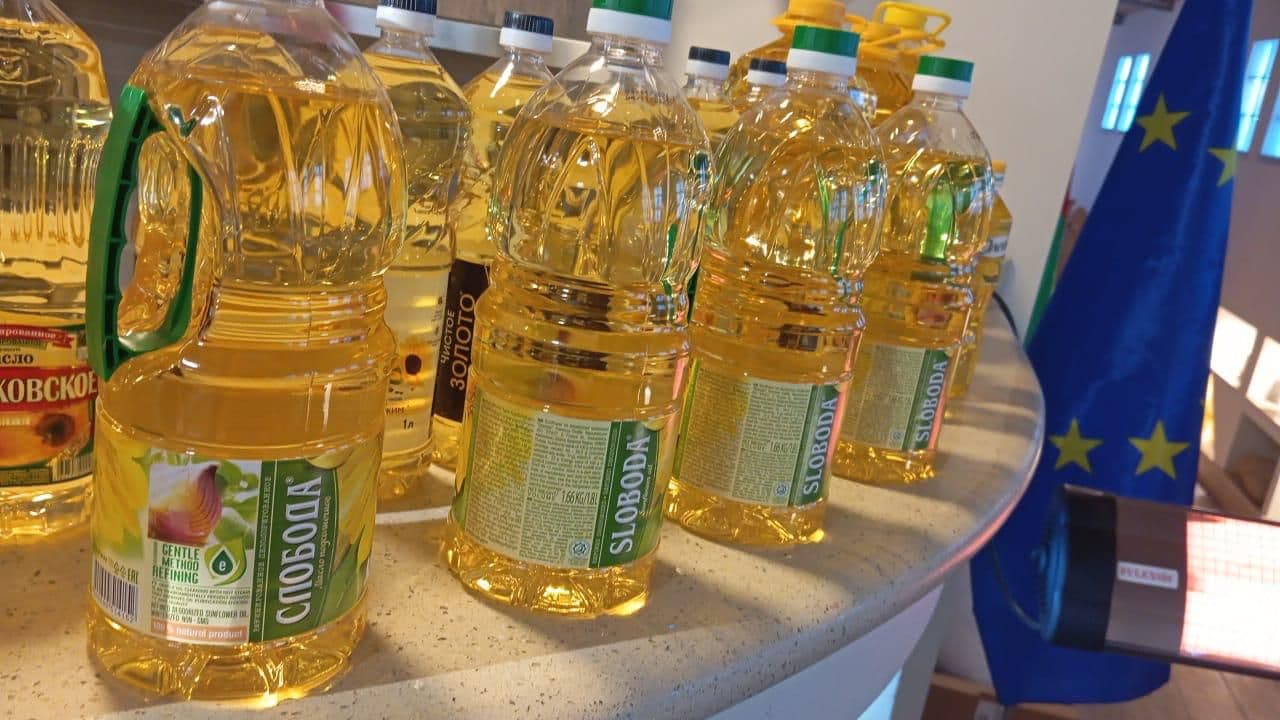



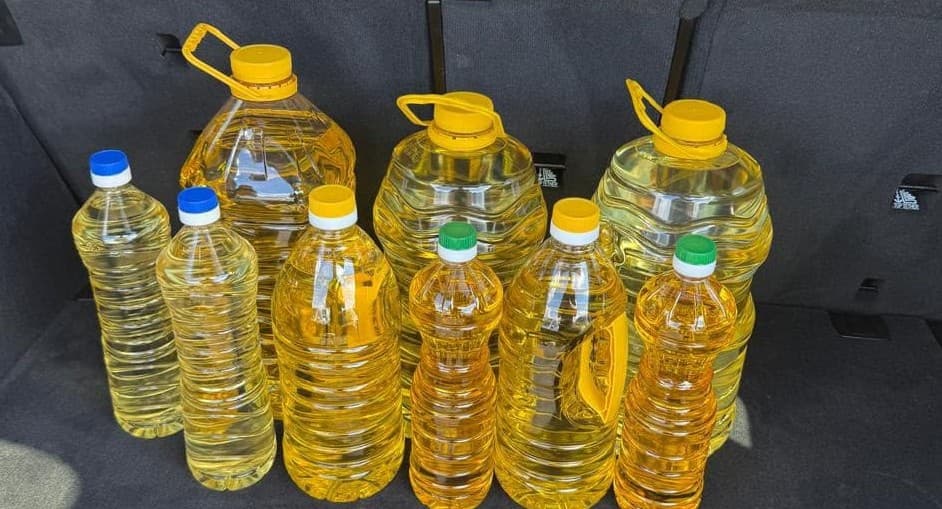
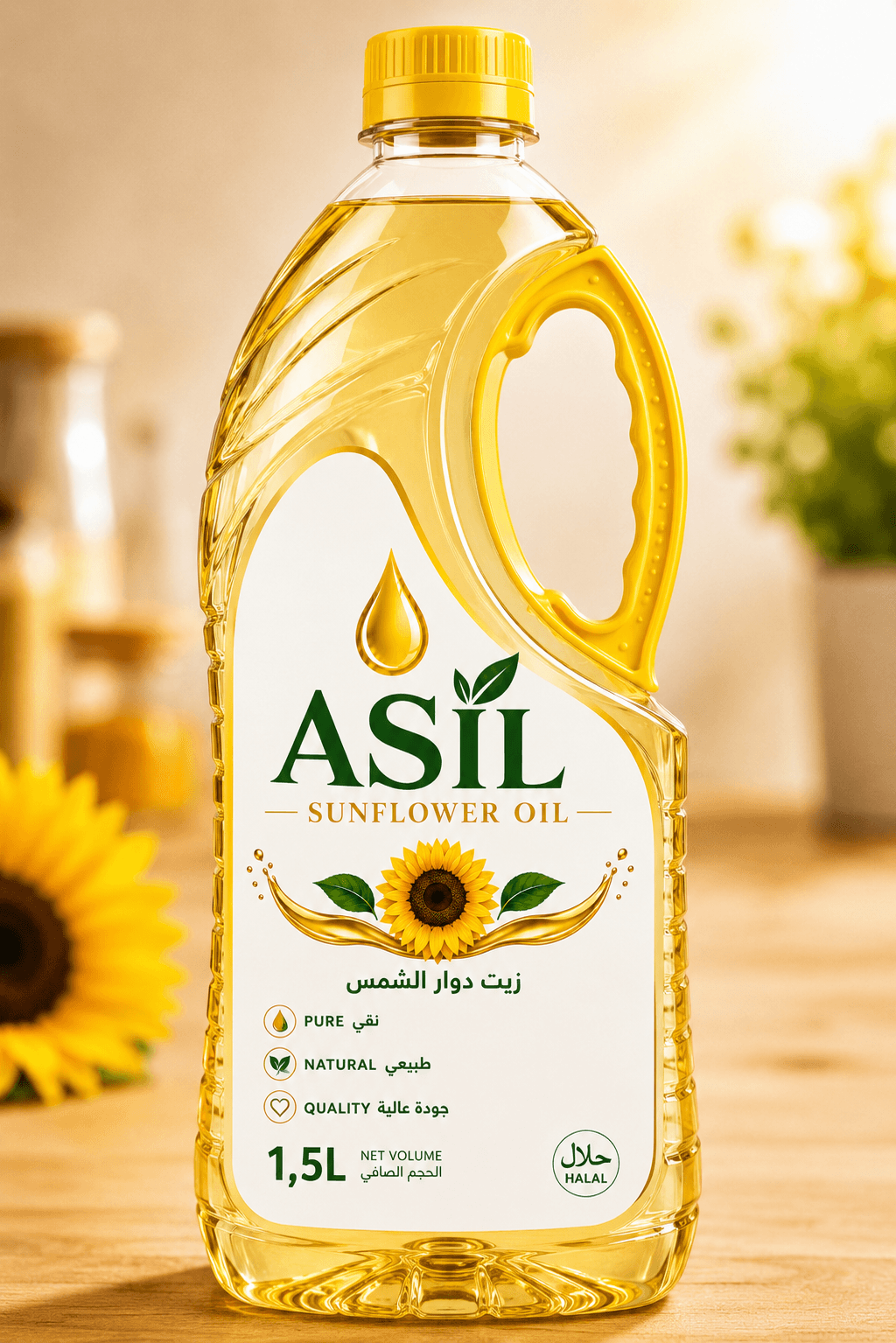





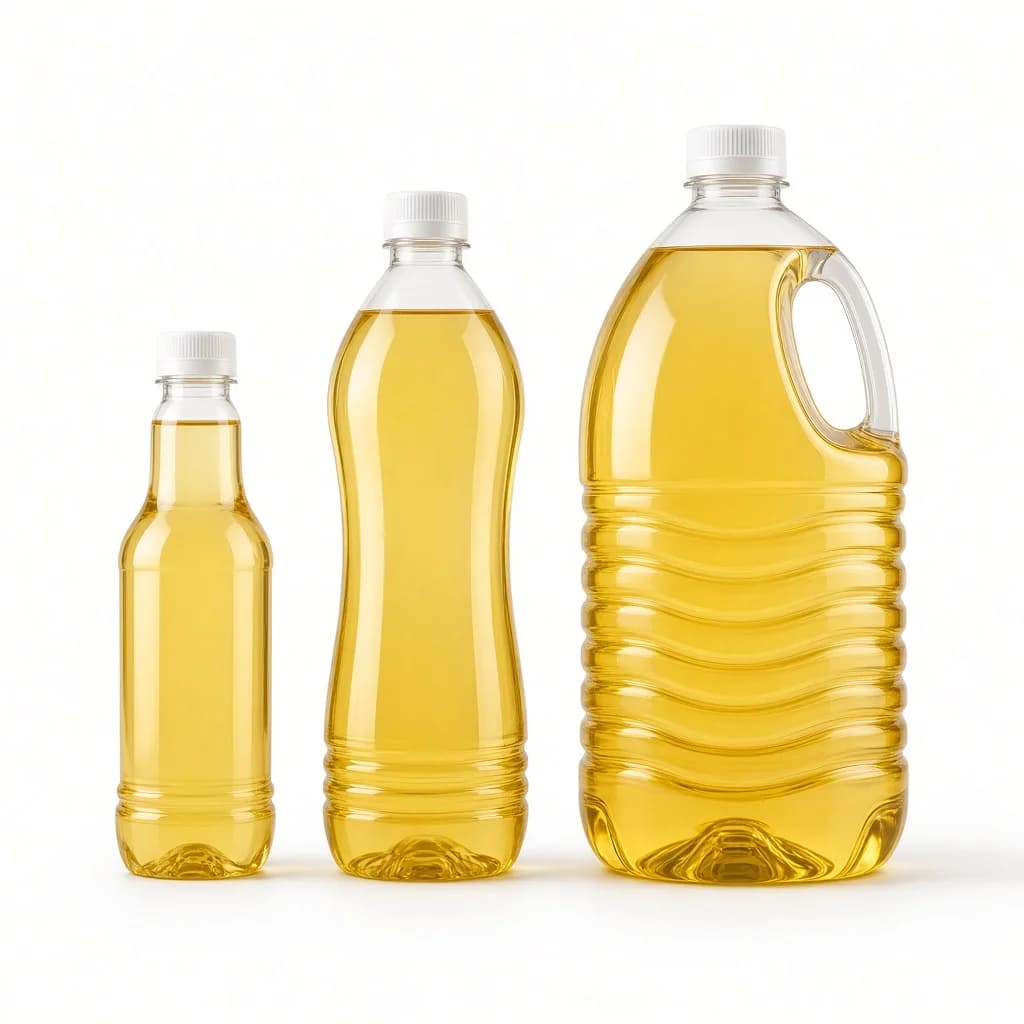
Browse sunflower and vegetable oils from Turkish manufacturers or post a request so it reaches the producers in the food category.

Many requests from English-speaking African buyers for cooking oil name the pack and the volume: 5-litre “gallons” and 25-litre jerrycans come up again and again, some buyers want the oil packed under their own label, others ask for one or more full containers, and some ask for a certificate of analysis before ordering. Cooking oil is sometimes combined with rice, pasta or canned food in one request; an oil refinery may not supply those, so post one request per product group.
What pack and specification should you ask for?
The most useful sunflower oil request states the oil type, the pack, the quantity and the delivery port together, because each of them changes the price. Some buyers, in Ghana for example, write “gallon” for a jerrycan, so write the volume in litres. Refined sunflower oil weighs about 0.92 kg per litre at 20 °C (relative density 0.916–0.923 in the Codex standard), so a 5-litre pack holds about 4.6 kg of oil and 1 kg is about 1.09 litres.
| Item | What to write in your request |
|---|---|
| Oil type | 100% refined sunflower oil, high-oleic sunflower oil, or a vegetable oil blend (ask for the composition) |
| Quality | refined, bleached, deodorised and winterised; acid value and peroxide value on the certificate of analysis (Codex reference for refined oils: up to 0.6 mg KOH/g and 10 meq/kg) |
| Fortification | vitamin A at the level your country requires, stated on the label and the certificate |
| Pack | PET bottle (0.5, 1, 2, 3 or 5 litres), 16–18 litre tin, 20 or 25-litre jerrycan; number of units per carton |
| Label | English, product name “sunflower oil”, production and expiry dates, remaining shelf life on arrival, your brand if you ask for it |
| Quantity | number of 20 or 40-foot containers; ask how many cartons fit per container for each pack |
| Delivery | port of arrival and final city, FOB or CFR price |
Bottled oil travels in dry containers; buyers who pack locally sometimes ask for a flexitank or tank container instead. For your own brand, ask the minimum order per pack and the lead time for new labels. To bottle oil yourself, see our guide to packaging and filling machines from Turkey.
What decides the wholesale price of Turkish sunflower oil?
The wholesale price of Turkish sunflower oil is set mainly by the crude oil price on the Black Sea market, the pack and the delivery terms, so compare suppliers only on the same specification. Small PET bottles cost more per litre than 25-litre jerrycans or bulk oil, because the bottle, cap, label and carton add more per litre.
| Price factor | What to check |
|---|---|
| Crude oil market | prices move with the season and with Black Sea supply; ask how long the price is valid |
| Pack | PET, tin or jerrycan; carton and pallet; your own label |
| Quality and fortification | 100% sunflower or blend; vitamin A premix |
| Delivery terms | FOB Turkish port or CFR your port; freight is priced separately by the shipping line or forwarder |
| Destination | duty, VAT and port fees in your country |
In Nigeria, Ghana and Tanzania cargo insurance must be bought locally, so ask for FOB or CFR prices rather than CIF. For landed cost, use our guides to Ghana import duty and import duty in Nigeria.
What are the import rules for sunflower oil in Nigeria, Ghana and East Africa?
Sunflower oil sold in Nigeria, Ghana, Kenya, Tanzania, Uganda and Zimbabwe must be fortified with vitamin A (in Tanzania and Uganda, confirm how the rule applies to imports), and packaged food usually needs registration with the national food authority before sale. Nigeria restricts refined vegetable oil imports from outside ECOWAS. Confirm the current rules for your HS code (1512.19 for refined sunflower oil, 1512.11 for crude) with your clearing agent before you pay.
| Country | Main rules for sunflower oil | What to check |
|---|---|---|
| Nigeria | Refined vegetable oil (except linseed, castor and olive oil) is on the import prohibition list; the revised list in force since 1 April 2026 still names it, and some reports describe a narrower ban on small retail packs; crude vegetable oil was excluded under the previous list; NAFDAC requires vitamin A of at least 20,000 IU/kg (Fats and Oils Regulations 2019) | Check your HS line against the official list before Form M |
| Ghana | All imported vegetable oil must be fortified with vitamin A (mandatory since 2010); each product must be registered with the Ghana FDA before import, with samples for testing; labels must name the plant source; stick-on labels are not accepted | Start FDA registration with samples before the first order |
| Kenya | Edible fats and oils must be fortified with vitamin A under the food fortification regulations; KEBS standards and conformity checks apply; the brand on imported goods must be registered with the Anti-Counterfeit Authority | Use the manufacturer's or your registered brand, never unbranded |
| Tanzania | Edible oil fortification with vitamin A is mandatory (since 2011); food products are regulated by TBS | Confirm with TBS that the fortification rule covers imports, and check the PVoC certificate requirement |
| Uganda | Vegetable oil fortification is mandatory; UNBS conformity programme | Confirm with UNBS that the fortification rule covers imports, and check the PVoC certificate requirement |
| Zimbabwe | Imported edible oil must be fortified under SI 120 of 2016 (cooking oil with vitamins A and D) | Check CBCA requirements with your agent |
| Zambia | Check whether vitamin A fortification applies to cooking oil | Confirm fortification, ZCSA and food safety requirements before ordering |
In the East African Community, the common external tariff on refined sunflower oil (HS 1512.19) has been 35% since July 2022, but member states change it every year: for 2026/27 Kenya applies 25% or $500 per tonne, Tanzania 35% or $300 per tonne (whichever is higher in each case) and Uganda 60%, according to the EAC Gazette of 30 June 2026. Ask your clearing agent for the rate on your exact code. Because most crude oil comes from outside Turkey, ask the supplier for a certificate of origin issued by a Turkish chamber of commerce and check with your agent that your customs accept it for oil refined and packed in Turkey.
How do you import sunflower oil from Turkey, step by step?
A first sunflower oil order from Turkey works best when the specification, label and registration are settled before the deposit.
- **Step 1:** fix the oil type, pack, quantity and port, and check your country's fortification and registration rules. - **Step 2:** ask at least two suppliers for a certificate of analysis, a label proof and cartons per container. - **Step 3:** order samples for testing (and, in Ghana, for FDA registration). - **Step 4:** agree in writing on price, Incoterm, price validity, lead time, label and shelf life on arrival. - **Step 5:** pay only to an account in the supplier company's name; a deposit with the balance before shipment or against documents is common, and a letter of credit suits larger orders. - **Step 6:** track the shipment: by sea, Turkey to Tema or Lagos usually takes 4–6 weeks, and to Mombasa or Dar es Salaam about 25–35 days, longer with transshipment. Buyers in Zambia and Zimbabwe can receive goods through Dar es Salaam, Durban or Beira (see our Zambia and Zimbabwe guides).
How Tafric helps sunflower oil buyers
Posting a request on Tafric is free. Write the oil type, pack, quantity in containers, delivery port and any vitamin A or label requirement, and Turkish producers in the food category can contact you directly. Post your sunflower oil request.
Frequently asked questions
Is Turkish sunflower oil made in Turkey?
It is refined and packed in Turkey, from local seed (Thrace, Adana, Konya), imported seed and imported crude oil, mainly from Russia and Ukraine.
Which countries buy refined sunflower oil from Turkey?
In 2024/25 the largest buyers were Djibouti, Iraq, Syria, Sudan and Libya; Senegal, Ghana, Tanzania, Mauritania, Somalia and Kenya also bought Turkish refined oil (Turkey's Ministry of Agriculture).
How many kg is 5 litres of sunflower oil?
About 4.6 kg. Refined sunflower oil weighs about 0.92 kg per litre at 20 °C, so 1 kg is roughly 1.09 litres.
Can I import sunflower oil from Turkey to Nigeria?
Refined vegetable oil from outside ECOWAS has long been on Nigeria's import prohibition list, and the revised list in force since 1 April 2026 still names it. Crude vegetable oil was excluded under the previous official list, and reports say it remains allowed for industrial use; ask a licensed customs agent to check your HS code against the current list before you open Form M.
Does imported sunflower oil need vitamin A in Ghana and Kenya?
Yes. Ghana requires all imported vegetable oil to be fortified with vitamin A, and Kenya requires edible fats and oils to be fortified. Ask the supplier to state the vitamin A level on the label and the certificate of analysis.
What is the difference between refined and crude sunflower oil?
Crude oil comes straight from pressing or extraction and must be refined before cooking use; refined oil is neutralised, bleached and deodorised and is sold in bottles and jerrycans.

The Tafric Editorial Team writes export, import and shipping guides for trade between Türkiye, Africa and the Middle East. Articles use data from real buying requests published on Tafric (with no personal information, stating the period covered) and official sources such as customs authorities, trade ministries, UN Comtrade and the World Bank. Articles get a second review of figures and regulations before publication and are updated when rules change. Details: our Editorial policy page.