


ON THIS PAGE
Tafric request data as of November 22, 2026
Electrical cables from Turkey are made by export-oriented manufacturers that sell mostly to Europe: Turkey exported $4.57 billion of insulated wire and cable (HS 8544) in 2025, according to UN Comtrade, with the United Kingdom and Germany as its largest buyers. To import them, specify each cable by standard, conductor size, number of cores, copper or aluminium and length, ask for test reports, and check conductor resistance before paying the balance.
Tafric is a B2B marketplace that connects Turkish manufacturers with African buyers: the buyer posts a request for free, Tafric checks it, and Turkish manufacturers in that category can contact the buyer directly.
Who makes electrical cables in Turkey?
Electrical cables in Turkey are made mainly in the Marmara region (Istanbul, Kocaeli and Bursa), in Kayseri and in Denizli, where cable and enamelled winding wire exports passed $1 billion in 2025 (Denizli Exporters' Association, DENİB). Because Europe is the main market, Turkish factories are used to working to IEC, European (EN) and British (BS) standards, the standards used in English-speaking Africa.
About $2.91 billion of the 2025 exports were insulated conductors for up to 1,000 volts without connectors (HS 8544.49), the group that includes building wire and low-voltage power cable; the rest includes medium-voltage cable, vehicle wiring harnesses and telecom cable, so a cable exporter is not automatically a power-cable manufacturer. Africa took about $349 million and Africa south of the Sahara about $190 million (UN Comtrade).
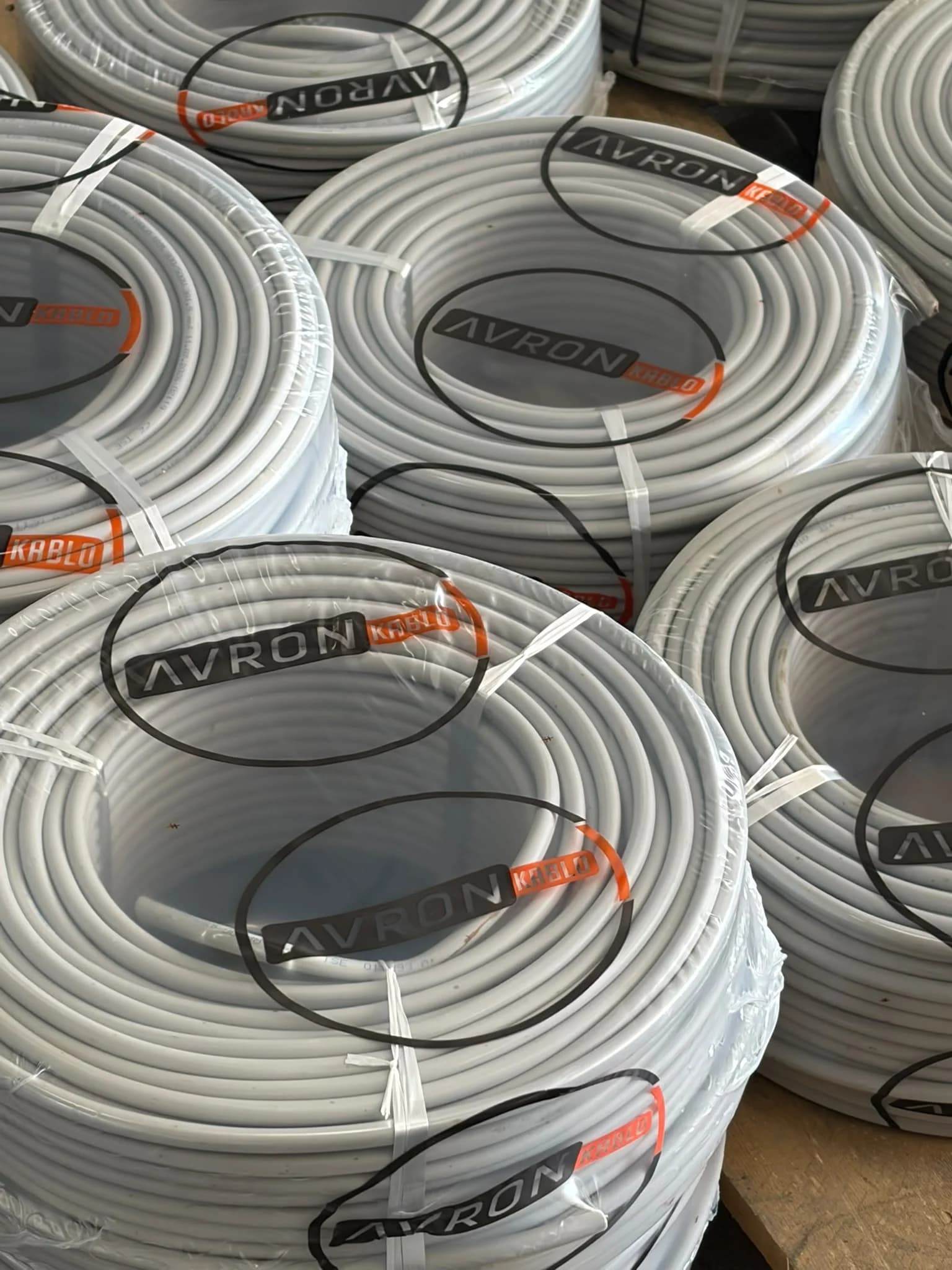
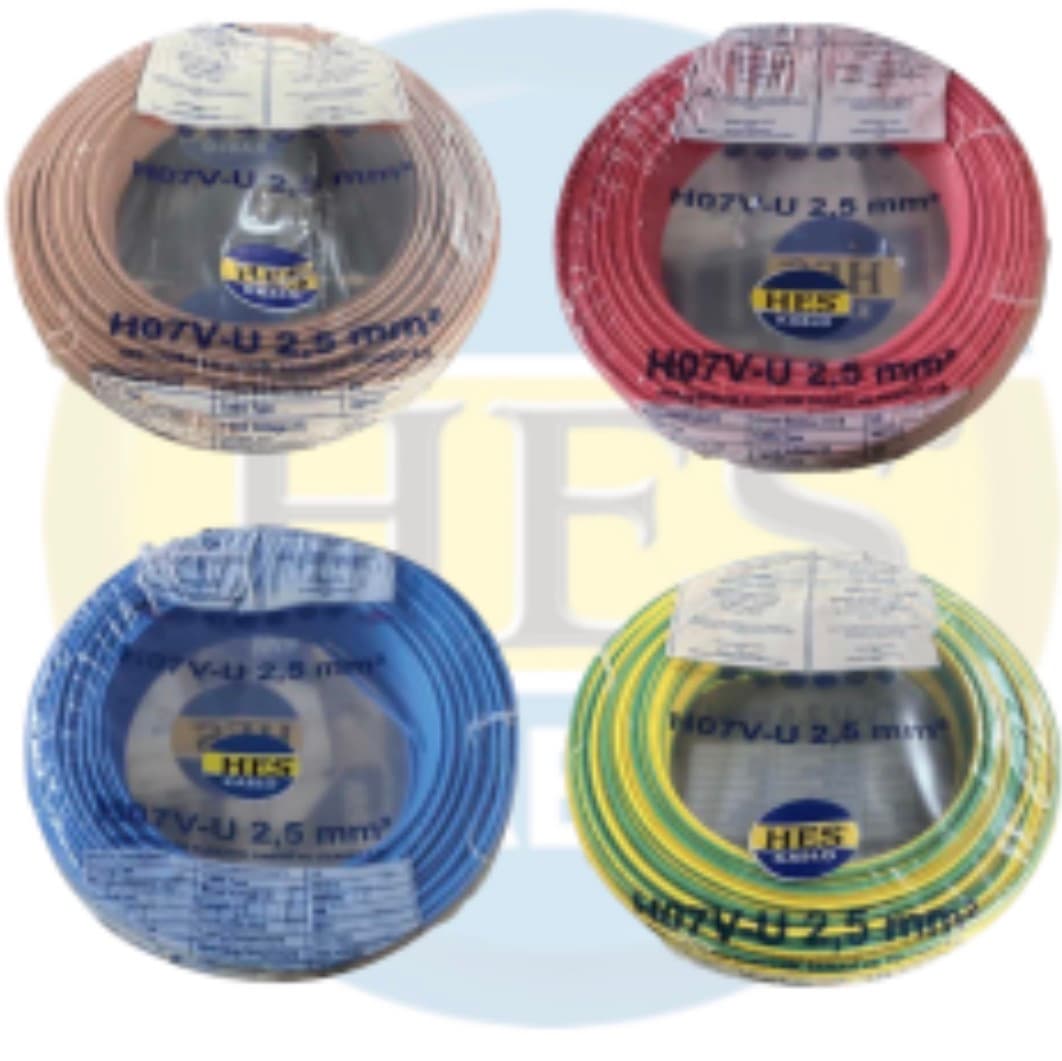
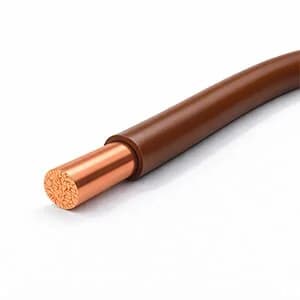
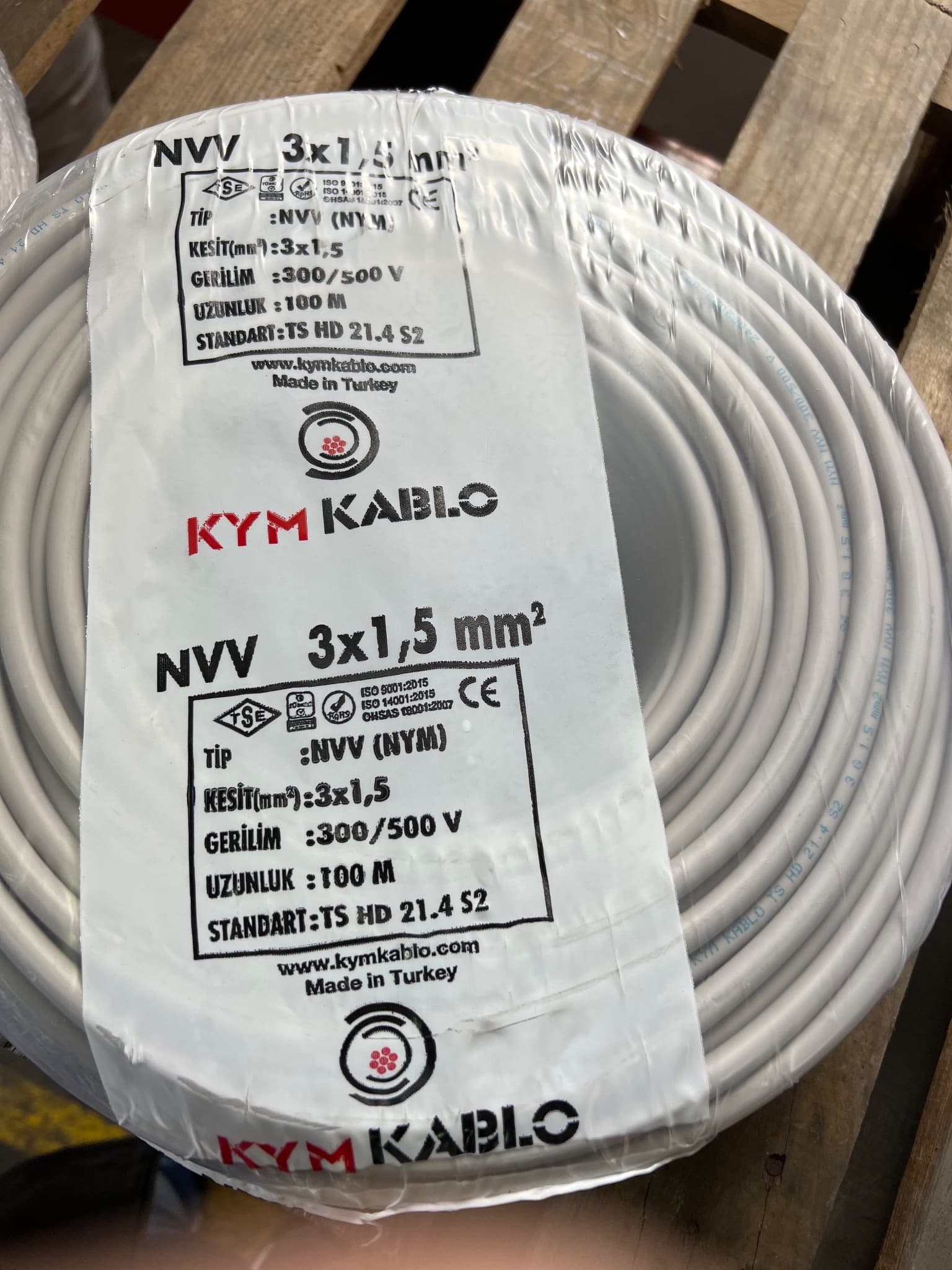
On Tafric you can browse electrical cables and wires from Turkish manufacturers or post a free buying request.
Which cables do African buyers order from Turkey?
African buyers order building wire and twin and earth cable in 1.5, 2.5, 4 and 6 mm² for buildings, flexible cords, steel wire armoured (SWA) cable for buried and outdoor supply, single-core copper cable for feeders, and solar DC cable. On Tafric, buyers write requests such as 1.5 and 2.5 mm² wire in rolls, 16 mm² multi-core armoured cable by the metre, armoured or medium-voltage cable together with transformers, and mixed lists of cables, switches, sockets and breakers for a shop.
| Name in the market | Designation and standard | Voltage | Typical use |
|---|---|---|---|
| Twin and earth 1.5 / 2.5 / 4 / 6 mm² | flat PVC twin and earth, type 6242Y, BS 6004 (low-smoke version 6242B, BS 7211) | 300/500 V | lighting and socket circuits in buildings |
| Single-core wire 1.5 / 2.5 mm² | H07V-U (solid) or H07V-R (stranded), EN 50525-2-31 / IEC 60227; UK type 6491X (formerly BS 6004) | 450/750 V | wiring in conduit |
| Flexible cable 2-core, 3-core | H05VV-F, EN 50525 / IEC 60227 | 300/500 V | appliances, extension leads |
| Armoured cable (SWA) 4, 10, 16, 25 mm², 2 to 4 cores | XLPE/SWA/PVC, BS 5467 (low-smoke BS 6724) or IEC 60502-1 | 600/1000 V | buried and outdoor supply, generators, pumps |
| Single-core copper 70 to 240 mm² | XLPE or PVC single-core, IEC 60502-1; aluminium wire armour (AWA) if armoured | 600/1000 V | feeders, generator and transformer connections |
| Solar cable 4 / 6 mm² | H1Z2Z2-K, EN 50618 / IEC 62930 | 1.5 kV DC | panel strings to the inverter |
| Medium-voltage cable | IEC 60502-2 for the network voltage (e.g. 11 or 33 kV in Nigeria) | 6 to 30 kV | utility and industrial networks |
Twin and earth has a smaller bare earth conductor (1.5 mm² in a 2.5 mm² cable, 2.5 mm² in a 6 mm²), so write the number of cores and the earth size. Single-core armoured cables use aluminium wire armour (AWA), because steel armour heats up on single-core AC cable. For solar systems, see our guide to solar panels, inverters and batteries from Turkey.
Which standards should cables from Turkey meet?
Cables from Turkey for Nigeria, Ghana, Kenya and other English-speaking countries should be made to a named British or IEC standard: BS 6004 or BS 7211 for twin and earth, EN 50525 for single-core wiring cables, BS 5467 or IEC 60502-1 for 600/1000 V armoured and power cables, IEC 60502-2 for medium voltage, and IEC 60228 for the conductors. If a utility, contractor or government tender gives a specification, send it to the manufacturer unchanged.
| Document | What it proves | What to check |
|---|---|---|
| Technical data sheet | construction, insulation thickness, diameter, weight per km | matches the standard and your order |
| Type test report | the cable design passed the tests of the standard | laboratory, date, the exact cable type |
| Routine test report | conductor resistance and voltage test on your production | per drum or batch |
| CE declaration of conformity | manufacturer's declaration under the EU Low Voltage Directive (50–1,000 V AC, 75–1,500 V DC) | signed, standards listed; it does not cover medium voltage |
| Sheath marking | manufacturer, type, size, voltage, year, metre marks | matches the invoice along the length |
CE is a manufacturer's declaration, not an independent certificate, and does not replace your country's conformity certificate. Agree the core colours with your electrician. For French-speaking markets, where the same cables are called fil TH, VGV or R2V, see our French guide to Turkish electrical cables.
How do you check that a cable is pure copper and full size?
The reliable check is to measure the resistance of its conductor and compare it with the maximum values of IEC 60228: an undersized or copper-clad aluminium conductor exceeds them even when the sheath is printed with the right size. Have a laboratory measure samples from your batch before you pay the balance.
| Conductor size (plain copper, class 1 or 2) | Maximum resistance at 20 °C (IEC 60228) |
|---|---|
| 1.5 mm² | 12.1 Ω/km |
| 2.5 mm² | 7.41 Ω/km |
| 4 mm² | 4.61 Ω/km |
| 6 mm² | 3.08 Ω/km |
| 10 mm² | 1.83 Ω/km |
| 16 mm² | 1.15 Ω/km |
Flexible (class 5) conductors have their own, slightly higher limits. Write "plain annealed copper" on the order, because copper-clad aluminium (CCA) is not copper, and check each roll's real length and weight per kilometre against the data sheet.
What decides the price of 2.5mm cable or 16mm armoured cable?
The price of 2.5mm cable or 16mm armoured cable from Turkey is decided first by the copper or aluminium price on the London Metal Exchange (LME), then by the conductor size and number of cores, the construction (insulation, armour, low-smoke sheath), the packing and the freight. Manufacturers therefore give short-validity or metal-linked prices, so note each price's date and validity.
| Price factor | Why it matters | What to specify |
|---|---|---|
| Metal | copper costs more than aluminium | plain copper or aluminium, never "copper colour" |
| Size and cores | more metal, higher price | mm², number of cores, earth included or not |
| Construction | XLPE, armour and low-smoke sheaths add cost | full designation and standard |
| Packing | 100 m rolls for shops, drums of 500 m or more for projects | length per roll or drum, drum type |
| Delivery | ex works, FOB or CFR | price to your port and the validity date |
Drums of armoured and large-size cable are heavy, so a container often reaches its weight limit before it is full; ask for a packing list per container. Nigeria, Ghana, Kenya and Tanzania require import cargo to be insured with a local insurer, so ask for FOB or CFR prices rather than CIF. For small first orders, read FCL or LCL from Turkey.
How do you import cables from Turkey to Nigeria, Ghana, Kenya and other countries?
To import cables from Turkey, confirm your country's pre-shipment conformity programme, because electrical cables are regulated products in Nigeria, Ghana, Kenya and many other African countries, agree the standard and tests in writing, inspect before shipment and clear through a licensed agent. Ask your agent to confirm the HS code, duty and current rules before paying a deposit.
| Country | What to check |
|---|---|
| Nigeria | e-Form M through your bank before shipment; SON Product Certificate (needed for Form M) and a SONCAP Certificate per shipment for regulated products such as electrical cables |
| Ghana | Ghana Standards Authority EasyPASS certificate of conformity before loading for electrical goods; cargo insurance with a Ghanaian insurer |
| Kenya | KEBS PVoC certificate of conformity before shipment; Import Declaration Fee 2.5% and Railway Development Levy 2% on the customs value, plus duty and VAT |
| Tanzania, Uganda | TBS and UNBS pre-shipment verification of conformity |
| Zambia | electric cables are under a compulsory standard (ZS 688); imports are inspected and certified by the Zambia Compulsory Standards Agency (ZCSA) at the border |
| Zimbabwe | insulated wire and cable (HS 85.44) is on the consignment-based conformity assessment (CBCA) list; certificate needed for consignments above US$1,000 FOB |
| South Africa | NRCS Letter of Authority for products under a compulsory specification, including cables |
1) Approve a written cable list (standard, size, cores, copper or aluminium, colours, metres, packing), the data sheet and a sample before production. 2) Have conductor resistance measured on the batch during your country's conformity inspection. 3) Pay the balance by bank transfer to the account of the company that invoices you. Turkey to West African ports takes about three to six weeks port to port, depending on the service; see our guide to pre-shipment inspection to Africa.
On Tafric, posting a request is free: write the cable type and standard, size, cores, copper or aluminium, quantity in metres and your delivery city, and Turkish manufacturers of electrical equipment can contact you directly. Post your request.
Frequently asked questions
Who are the cable manufacturers in Turkey?
Turkish cable manufacturers are concentrated in Istanbul, Kocaeli, Bursa, Kayseri and Denizli, and many export to the United Kingdom and Germany to BS, IEC and EN standards.
What is the price of 2.5mm cable in Ghana or Nigeria?
There is no single price: it follows the LME copper price and depends on the standard, roll length, certificates, freight and duty. Compare prices per 100 m roll on the same specification, FOB or CFR, with a validity date.
What size armoured cable do I need?
The size depends on load current, cable length, voltage drop and installation method, so take it from your electrician's calculation. Give the manufacturer the size, cores and standard (BS 5467 or IEC 60502-1).
What is twin and earth cable?
Twin and earth is a flat PVC cable with two insulated conductors and a smaller bare earth, type 6242Y under BS 6004, rated 300/500 V, used for lighting and socket circuits.
How can I know if a cable is pure copper?
Measure the conductor resistance and compare it with the IEC 60228 maximum, for example 7.41 Ω/km for 2.5 mm² plain copper at 20 °C. Copper-clad aluminium and undersized conductors give higher values.
Do I need a certificate to import electrical cables into Nigeria or Kenya?
Yes. Nigeria requires a SON Product Certificate and a SONCAP Certificate per shipment for regulated products, and Kenya a KEBS PVoC certificate of conformity before shipment.
The Tafric Editorial Team writes export, import and shipping guides for trade between Türkiye, Africa and the Middle East. Articles use data from real buying requests published on Tafric (with no personal information, stating the period covered) and official sources such as customs authorities, trade ministries, UN Comtrade and the World Bank. Articles get a second review of figures and regulations before publication and are updated when rules change. Details: our Editorial policy page.