



ON THIS PAGE
A Turkish supplier quotes you 18,000 dollars CFR Tema for a container of ceramic tiles. What will that container actually cost once it has cleared Ghana Customs, paid every levy on the ICUMS declaration and left the port? Most first-time importers guess somewhere around the duty rate and are surprised by a bill that is 40 to 50 percent above the invoice. This guide walks through how Ghana calculates import duty and the stack of levies that sit on top of it, which tariff band typical Turkish products fall into, and how to use the calculator below to estimate a landed cost before you commit to an order.
How Ghana values imports: CIF, not invoice price
Ghana Customs, operating through the Integrated Customs Management System (ICUMS), assesses duty on the CIF value of a consignment: the price paid for the goods plus freight to Tema or Takoradi plus insurance. If your supplier quoted CFR, the freight is already inside the price and Customs adds a notional insurance amount; if the quote was FOB, both freight and insurance are added at declaration. This is why a lower freight rate saves you more than the freight itself, because every percentage levy is applied to a smaller base. It is also why the invoice must show the terms of sale clearly; a CFR figure with no freight breakdown can be queried during valuation.
Customs may also apply reference values when the declared price looks low against its database, so an unrealistically cheap invoice does not reduce the bill and can trigger a post-clearance audit. Work with the actual transaction value and keep the proforma, the commercial invoice, the packing list and the bill of lading consistent. For the document set a Turkish exporter should be providing, see the import from Türkiye to Ghana guide.
ECOWAS tariff bands: where Turkish products land
Ghana applies the ECOWAS Common External Tariff. Goods are classified into five bands by HS code: 0 percent for essential social goods, 5 percent for raw materials and capital goods, 10 percent for intermediate goods, 20 percent for finished consumer goods and 35 percent for a short list of products with local production to protect. The bulk of what arrives from Türkiye sits in the 10 and 20 percent bands. Ceramic tiles, sanitaryware, furniture, home textiles, cosmetics, processed foods and most household goods are generally in the 20 percent band; steel rebar and many building materials sit around 10 to 20 percent depending on the sub-heading; machinery, generators and industrial equipment are typically 5 to 10 percent.
Because the band follows the HS sub-heading rather than the product name, two items that look alike in a catalogue can carry different rates. Ask your supplier for the six-digit HS code on the proforma and confirm the Ghanaian tariff line with your clearing agent before you agree the price. The Türkiye-Africa building materials analysis lists typical HS headings for the construction category.
The levies on top of duty: VAT, NHIL, GETFund and the rest
Import duty is only the first line on a Ghana customs assessment. Value added tax is charged at roughly 15 percent, and alongside it come the National Health Insurance Levy (NHIL) at around 2.5 percent and the Ghana Education Trust Fund levy (GETFund) at around 2.5 percent; a COVID-19 health recovery levy of about 1 percent has also applied in recent years. These are calculated on a base that includes the CIF value plus duty, which is what makes the effective rate climb. Smaller statutory charges follow: an ECOWAS levy of about 0.5 percent, an African Union levy of about 0.2 percent, an EXIM levy of around 0.75 percent, a processing or examination fee and, for some product groups, a special import levy.
Then come the non-tax costs that belong in any honest landed-cost estimate: shipping line destination charges, terminal handling at Tema, container deposit or demurrage exposure if clearing runs late, the clearing agent's fee, and inland haulage to your warehouse. None of these are levies but every one of them lands on the same container. A useful rule of thumb for a 20 percent band consumer product is that taxes and fees together add roughly 45 to 55 percent to the CIF value; for a 5 percent band machine the figure is closer to 25 to 30 percent. Treat both as ranges rather than promises.
The duty rate is the headline; the levies on top of it are the story. Budget on the effective rate, and confirm it on the HS line before the goods sail.
Ghana import duty calculator: estimate your landed cost
The estimator below applies the cascade the way Ghana Customs broadly does: duty and the percentage levies on the CIF value, VAT on CIF plus duty plus levies, and fixed port and agent fees added at the end. The defaults represent a typical 20 percent band consumer product arriving at Tema; change the goods value, freight and rates to match your quote and your HS line. Because rates and exemptions change with each budget and by product, treat the output as a planning figure and have your clearing agent confirm the actual assessment.
Estimate only. Rates are editable; confirm the applicable tariff line and levies with your clearing agent before ordering.
Two things to notice as you play with the numbers. First, moving from a 20 percent band to a 10 percent band changes the total by far more than ten points of CIF, because VAT and the health and education levies compound on top of duty. Second, freight is taxed: a 400 dollar saving on the ocean rate is worth closer to 550 dollars at the gate. That is why it pays to compare Turkish suppliers on CFR Tema rather than on factory price, and why the Türkiye-Africa container freight guide matters as much as the price list.
Exemptions, concessions and the paperwork that unlocks them
Ghana operates several concession schemes that can reduce or remove duty for qualifying importers: manufacturers importing raw materials and machinery under investment incentives, agricultural inputs, certain medical and educational goods, and projects under the Ghana Investment Promotion Centre or the free zones regime. These are not automatic. They are applied for before the goods arrive, they attach to a specific importer and product, and they are checked at clearance. If your business qualifies, the saving is large enough to justify the application; if it does not, do not let a supplier or agent price the deal as though it did.
Certain goods also require conformity assessment before shipment. Ghana's standards authority runs a conformity programme for regulated products such as electrical goods, building materials, food and cosmetics; the certificate is issued after inspection or testing in the country of origin and is presented at clearance. Missing it means the goods can be held, tested locally at your cost or refused. Ask your Turkish supplier early whether the product falls under the programme and who arranges the inspection; the pre-shipment inspection guide explains how these schemes work across West Africa.
Clearing at Tema: timeline, agent and demurrage
A clean clearance at Tema for a container from Türkiye typically runs from a few days to about two weeks after discharge, depending on whether the declaration is selected for physical examination and whether documents are complete. The clearing agent lodges the declaration on ICUMS, pays the assessed duties and levies, obtains release and arranges the truck. Delays almost always trace back to a mismatch between documents (invoice, packing list, bill of lading, conformity certificate) or to a valuation query. Every day beyond the free period costs demurrage to the shipping line and storage to the port, and these can exceed the duty on a low-value cargo.
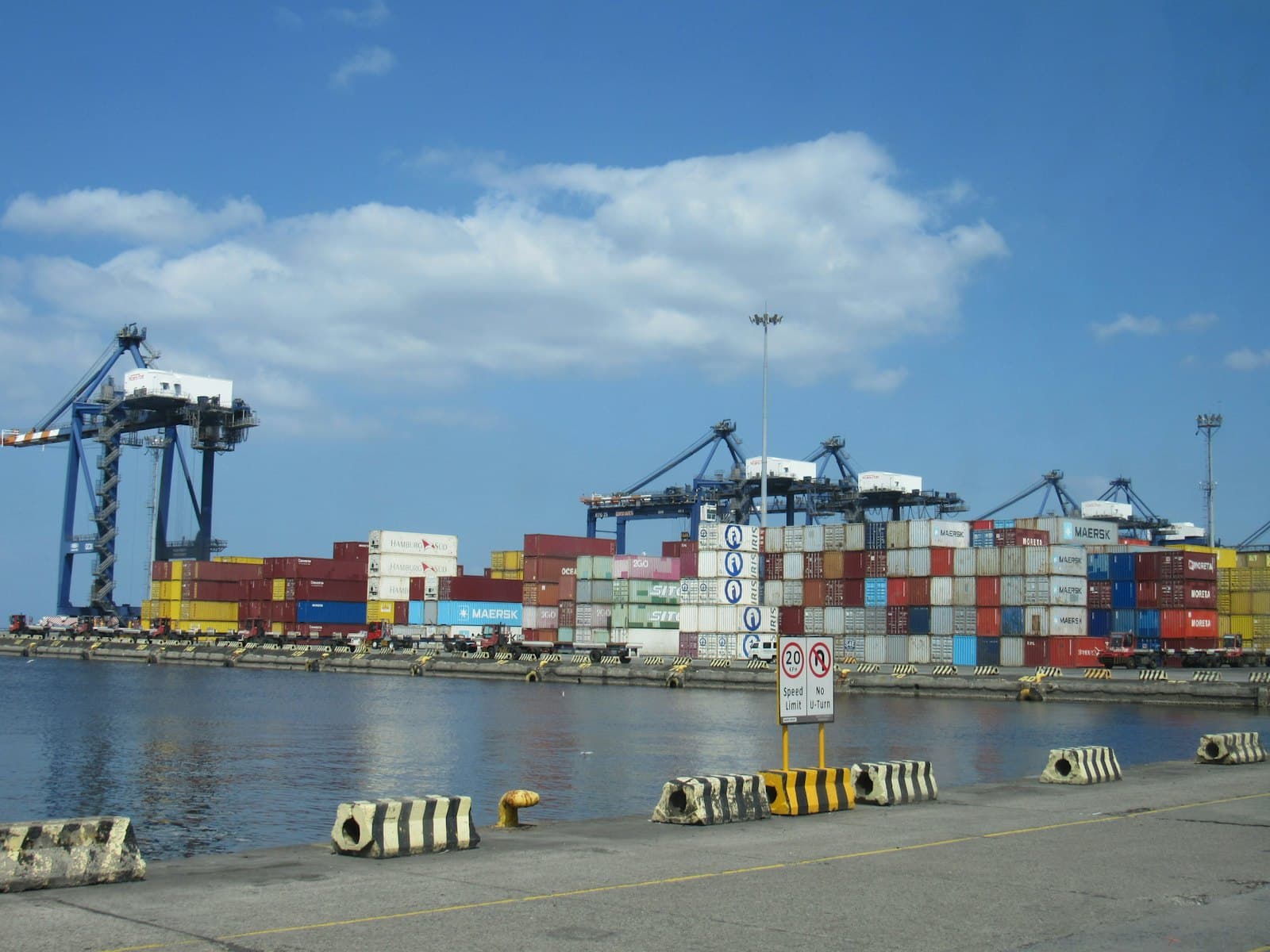
Choose an agent who works Tema daily and who will give you a written pre-assessment on the HS line before the vessel arrives; that pre-assessment is the real-world version of the calculator above. Request an itemised bill after release so you can compare it with the estimate and refine your numbers for the next order. For the port itself and how it compares to Lagos and Abidjan, see the West Africa ports comparison.
Turning the landed cost into a better purchase
Once you know the effective rate, negotiate on it. Ask suppliers for CFR Tema with freight shown separately, request the six-digit HS code on the proforma, and compare quotes on landed cost rather than on invoice price. Consider whether a heavier 20-foot load or a 40-foot high cube lowers the freight share per unit, because that reduction is taxed too. When the difference between two suppliers is small on invoice but large on landed cost, the tariff line explains it.
Open buyer requests on Tafric let you state your target port, quantity and the terms you want; verified Turkish manufacturers respond with CFR quotes and the documents your clearing agent will ask for. If you are comparing sources, the guide to finding and verifying Turkish manufacturers covers what to check before you pay a deposit.


Rates in this guide are indicative for 2026 and change with each budget statement; the structure, CIF valuation, ECOWAS band, VAT and levies on top, fixed port and agent fees at the end, is what stays the same. Use the calculator to plan, use your clearing agent's pre-assessment to commit, and use the landed cost, not the invoice, to decide.
Frequently asked questions
How is import duty calculated in Ghana?
Duty is charged as a percentage of the CIF value (goods plus freight plus insurance) according to the ECOWAS Common External Tariff band of the product's HS code: 0, 5, 10, 20 or 35 percent. VAT, NHIL, GETFund and smaller levies are then added on a base that includes the duty, which is why the effective rate is well above the headline band.
What is the total tax on imports into Ghana?
For a typical finished consumer product in the 20 percent band, duty plus VAT (about 15 percent), NHIL and GETFund (about 2.5 percent each), the COVID-19 levy and the ECOWAS, AU and EXIM levies bring taxes to roughly 45 to 55 percent of CIF. Capital goods in the 5 percent band land closer to 25 to 30 percent. Confirm the exact figure on your HS line with a clearing agent.
Does Ghana charge VAT on imported goods?
Yes. VAT at around 15 percent applies to most imports and is calculated on the CIF value plus duty plus the other levies, not on the invoice price alone. Some goods, such as certain medical, educational and agricultural items, are exempt or zero-rated.
Which documents do I need to clear goods from Türkiye at Tema?
Commercial invoice, packing list, bill of lading, certificate of origin from the Turkish chamber of commerce, any conformity certificate required for regulated products, your importer registration and tax identification, and the ICUMS declaration lodged by your clearing agent. Consistency across the documents is what prevents valuation queries and delays.
Can I reduce import duty on goods from Türkiye?
Türkiye has no preferential trade agreement with Ghana, so the ECOWAS CET rate applies. Savings come from correct HS classification, lower freight (because freight is taxed), concession schemes for qualifying manufacturers, agricultural or medical imports, and avoiding demurrage through complete documents.