


ON THIS PAGE
Tafric request data as of October 28, 2026
Clinic owners and lab managers across Africa search Google for 'laboratory equipment suppliers in Nigeria', 'medical laboratory equipment price list' and 'lab reagents suppliers in Kenya'. This guide is for buyers who are setting up or expanding a medical laboratory and want to source from Turkish manufacturers and distributors.
Short answer
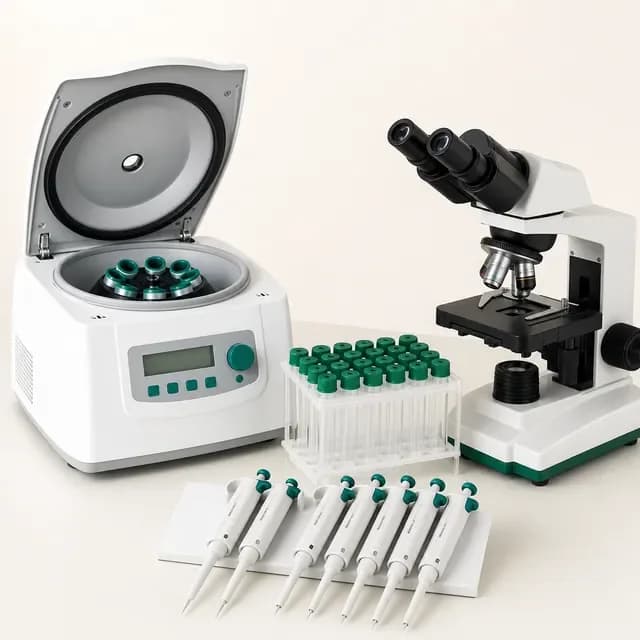
A typical new diagnostic lab needs a hematology analyzer, a chemistry analyzer, an electrolyte analyzer, a microscope and a centrifuge, plus reagents and consumables. Check that reagents for your analyzer will stay available, register regulated products with your country's authority, ship cold-chain reagents by air, and buy installation, training and service together with the equipment.
Turkey, China or a local distributor?
Many analyzers on the African market are international brands, and some Turkish suppliers are distributors of these brands with their own service teams. Turkish manufacturers also make centrifuges, incubators, autoclaves, water baths, laboratory furniture and consumables. Compared with ordering directly from China, a Turkish supplier often means a shorter route to West Africa and easier communication on installation and service. Ask each supplier whether they manufacture or distribute the product.
Equipment list for a diagnostic laboratory
| Test area | Equipment | Notes |
|---|---|---|
| Full blood count (FBC) | Hematology analyzer, 3-part or 5-part | 5-part gives a fuller white-cell differential |
| Chemistry (glucose, liver, kidney) | Chemistry analyzer, semi or fully automatic | Fully automatic suits higher daily volumes |
| Electrolytes (Na, K, Cl) | Electrolyte (ISE) analyzer | Sometimes a module of the chemistry analyzer |
| Microscopy | Binocular microscope | LED illumination helps where power is unstable |
| Sample preparation | Centrifuge | Check tube sizes and speed |
| Collection | Vacuum tubes (red, purple, grey), needles | Serum, EDTA and fluoride tubes |
Open vs closed analyzers and reagents
A closed-system analyzer runs only with its own brand's reagents; an open system can use reagents from other suppliers. Before you buy, ask which reagents the analyzer needs, who supplies them in your country, how many tests one kit gives and the shelf life. If you already own an analyzer, give its brand and model when you ask for reagents.
What drives the price
Price depends on the brand and level of automation, throughput (tests per hour), the number of parameters, whether the first reagent set, installation and training are included, and the warranty. Compare suppliers on the full package for your daily test volume, and include the cost of reagents per test, not just the machine.
How to import lab equipment from Turkey, step by step
1) List the tests and your daily volume, and note your power situation. 2) Check registration: in many countries medical devices and in vitro diagnostics are regulated (NAFDAC in Nigeria, the Pharmacy and Poisons Board in Kenya, the FDA in Ghana), and registration usually goes through the importer or a local representative. 3) Post a request and compare full packages. 4) Ask for the CE certificate, ISO 13485 and a free sale certificate. 5) Agree installation, training, warranty and spare parts in writing. 6) Ship equipment by sea or air and cold-chain reagents by air; your clearing agent clears the goods.
Shipping, cold chain and power
Many reagents (most chemistry kits) must stay at 2-8 °C and travel by air with cold-chain packing, while room-temperature reagents can go by sea; check the remaining shelf life on arrival. Analyzers are sensitive to power cuts and voltage changes, so plan a UPS and voltage regulator. For customs steps, see our guides on importing from Türkiye to Nigeria, to Kenya and to Ghana.
How Tafric works for buyers
Posting a request is free. Tafric checks it before it goes live, then Turkish laboratory suppliers see it and contact you directly with a proposal. You compare, ask questions and agree terms with the supplier you choose. Post your request or browse laboratory equipment from Turkish suppliers.


Frequently asked questions
What equipment do I need to start a medical laboratory?
A typical starting list is a hematology analyzer, a chemistry analyzer, an electrolyte analyzer, a binocular microscope and a centrifuge, plus reagents, vacuum tubes, rapid tests and gloves. The exact list depends on the tests you will offer and your daily volume.
Where can I buy reagents for my analyzer?
Give the analyzer's brand and model in your request. Closed-system analyzers need their own brand's reagents; open systems can use other suppliers. Ask about kit size, tests per kit and shelf life.
Do I need registration to import lab equipment?
In many African countries medical devices and in vitro diagnostics are regulated, for example by NAFDAC in Nigeria, the Pharmacy and Poisons Board in Kenya and the FDA in Ghana. Registration usually goes through the importer or a local representative; check with the authority before ordering.
How are lab reagents shipped from Turkey?
Many reagents (most chemistry kits) need 2-8 °C and travel by air with cold-chain packing; room-temperature reagents can go by sea. Ask the supplier for the shelf life and the remaining time at shipment.
How do I post a laboratory equipment request?
List the equipment or tests, your daily volume and any existing analyzer brand, add your city, then publish. It is free, and Turkish suppliers contact you directly.