


ON THIS PAGE
Tafric request data as of November 15, 2026
Turkey is one of the world's main sources of towels and bed linen: its home textile exports reached about $2.4 billion in 2025, sixth in the world according to ITC Trade Map data cited by Turkey's Ministry of Trade, and it was the fourth-largest exporter of cotton towels in 2024 after China, India and Pakistan, according to UN Comtrade data. Most towels, bathrobes and bed linen come from Denizli and Bursa. To buy well, specify towels by size and weight in grams per square metre (GSM) and sheets by fibre, weave and thread count, ask for a sample, and check your country's import conformity rules before you pay.
Tafric is a B2B marketplace that connects Turkish manufacturers with African buyers: the buyer posts a request for free, Tafric checks it, and Turkish manufacturers in that category contact the buyer directly.
Where are towels and bed linen made in Turkey?
Towels, bathrobes and bed linen in Turkey are made mainly in Denizli and Bursa, with blankets in Uşak and curtain tulle and sheets also in Istanbul. Denizli is the largest towel centre: according to the Denizli Exporters' Association (DENİB), Denizli companies ship about three quarters of Turkey's towel exports, two thirds of its bathrobe exports and around 60% of its duvet cover exports. Most producers are small and medium-sized companies, and some also produce under licence for foreign brands.
| Production centre | Main products | What buyers source there |
|---|---|---|
| Denizli | towels, bathrobes, bed linen | hotel towels, bathrobes, bed sheet and duvet cover sets |
| Bursa | towels, curtain tulle, bed sheets | towels, sheets, curtain fabrics |
| Uşak | blankets | blankets and throws |
| Istanbul | tulle, bed sheets | bed linen, trading companies with mixed ranges |
In the Ministry of Trade's home textile statistics, bed sheets are the largest export item, followed by curtain and upholstery fabrics and by towels and bathrobes. Germany and the United States are the biggest markets; Turkey's home textile exports to African countries are still small, so many Turkish factories work to European specifications. Explain clearly who the product is for: a hotel laundry, a retail shelf or a hospital ward.
What should a hotel towel specification include?
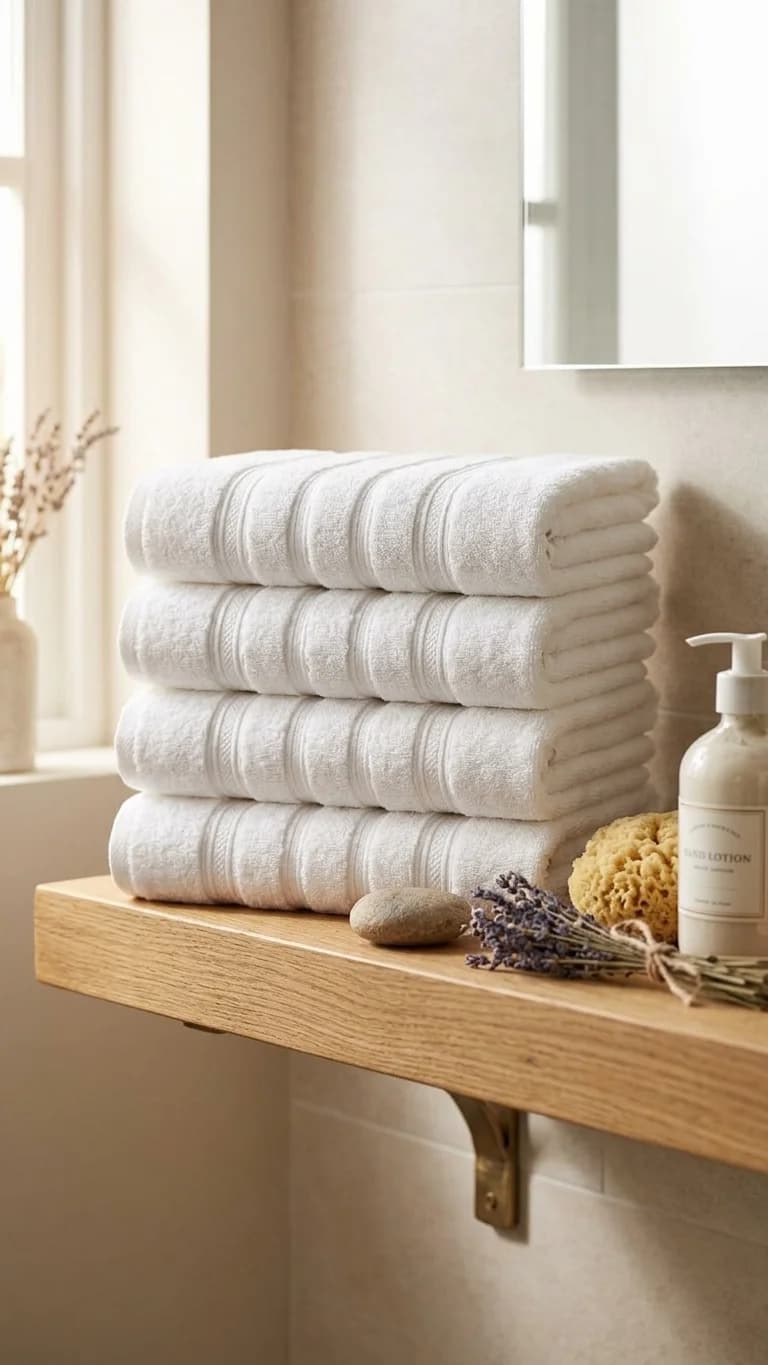
A hotel towel specification should include the size in centimetres, the weight in GSM, the fibre and yarn (for example 100% combed or ring-spun cotton), the colour, the border style and any logo or embroidery. GSM is the single most important number: it tells you how heavy, absorbent and durable a towel is. A 70 × 140 cm bath towel at 500 GSM weighs about 490 grams; at 700 GSM it weighs about 690 grams.
| Item | Typical size in hotels | Typical weight |
|---|---|---|
| Bath towel | 70 × 140 cm | 500–600 GSM; 400–550 for mid-range, 550–700 for upper-scale hotels |
| Hand towel | 50 × 90 or 50 × 100 cm (40 × 60 and 40 × 70 also used) | same range as the bath towel |
| Face towel | 30 × 30 cm | same range |
| Bath mat | about 50 × 80 cm | heavier than towels |
| Bath sheet | 90 × 150 to 100 × 150 cm | same range as the bath towel |
There is no single international standard for hotel towel sizes, so write the exact size and GSM on your order and ask for the tolerance. Combed or ring-spun long-staple cotton reduces lint, which matters in industrial laundries. White towels with a woven dobby border are the classic hotel choice because they survive bleach; coloured towels suit retail and spas. If you want your logo, say whether it should be woven into the border or embroidered, and ask for the extra lead time and cost.
Percale or sateen, cotton or poly-cotton for hotel sheets?
For hotel bed sheets, percale is usually the better choice than sateen because its plain one-over-one weave stands up better to industrial washing, while sateen feels smoother but snags and pills more easily under industrial washing. Many hotels use percale at around 200–300 thread count, and sateen is chosen mainly for a luxury feel or for retail; above that, a higher thread count mainly adds cost rather than durability. Poly-cotton blends (50/50 or 60/40) wrinkle less, dry faster and last longer in heavy laundries, which suits budget hotels and hospitals; 100% cotton is softer and is preferred in upper-scale hotels.
| Choice | Strengths | Best for |
|---|---|---|
| Percale, 100% cotton | crisp, breathable, durable in laundry | mid-range and upper-scale hotels |
| Sateen, 100% cotton | smooth, slight sheen, soft hand feel | luxury hotels, retail |
| Poly-cotton 50/50 or 60/40 | less ironing, fast drying, long life in industrial washing | budget hotels, hospitals, guest houses |
| Jersey fitted sheets | stretch, easy to fit | homes, retail |
Order sheets by the mattress size used in your hotel and add an allowance for shrinkage. A full hotel set usually includes a flat or fitted sheet, a duvet cover and pillowcases; many hotels also buy duvets, pillows, mattress protectors and bathrobes from the same supplier, which helps fill a container.
Browse home textiles and towels from Turkish manufacturers or post a request so it reaches the manufacturers in your category.
What does OEKO-TEX Standard 100 prove?
OEKO-TEX Standard 100 shows that a textile product, including its yarn, buttons and accessories, has been tested against more than 1,000 harmful substances; it does not prove that the cotton is organic or that working conditions are fair. The certificate is issued in four classes (class 1 for baby products, class 2 for items in contact with skin such as bed linen, class 3 for items without skin contact and class 4 for decoration such as curtains), is valid for one year, and can be checked online with its number in the OEKO-TEX Label Check. Organic cotton is certified separately, for example under GOTS.
Ask the supplier for the certificate number, check that it covers the product and class you are buying, that it is still valid and that the holder named in the Label Check is the factory or supplier, not only a trader. Many Turkish home textile factories hold OEKO-TEX certificates because European buyers ask for them.
What are the import rules for towels and bed linen in Africa?
Towels and bed linen shipped to Kenya, Tanzania, Uganda, Ghana and Zimbabwe need a certificate of conformity issued before shipment under each country's conformity programme, and Nigeria needs SONCAP after you confirm that your HS code is not on the current prohibition list. The table summarises the main rules for HS 6302 (bed, table, toilet and kitchen linen, including towels); confirm them with your clearing agent before you pay. Bathrobes are classified as garments (chapters 61–62), blankets under 6301, curtains under 6303, and duvets, pillows and mattress protectors with filling under 9404, so each has its own duty rate.
| Country | Rule for towels and bed linen | What to check |
|---|---|---|
| Kenya | KEBS PVoC: textiles need a certificate of conformity before shipment | Shipments arriving without one pay an inspection fee of 5% of the customs value |
| Tanzania | TBS PVoC: bed linen is listed among regulated textile products | Certificate of conformity before shipment |
| Uganda | UNBS PVoC: bed sheets, bedspreads and blankets are named in the textile group | Certificate of conformity before shipment |
| Ghana | GSA EasyPASS: textiles are in scope; since 1 July 2026 the certificate is obtained from the GSA portal before shipment | Towels and bed linen are not on GSA's high-risk list; the only textiles on it are African prints |
| Zimbabwe | CBCA: clothing and textile products, including blankets, need a CBCA certificate | Goods without one face a penalty and inspection on arrival |
| Nigeria | Earlier lists banned textile articles including HS 6302; the revised 17-item list in force since 1 April 2026 does not name textiles in its published item list, but the official tariff annex has not been published | Ask a licensed customs agent to confirm HS 6302 against the current list and to start SONCAP before you open Form M |
In the East African Community, the common external tariff is 25% on cotton terry towels (HS 6302.60) and on most synthetic bed linen, and 50% on cotton bed linen, which is listed as a sensitive product. Member states change some rates every year: for 2026/27, Kenya applies 25% or $0.75 per kilogram, whichever is higher, on several 6302 lines, and Uganda applies 35% on most bed linen and towels. For poly-cotton, the fibre that is heavier by weight decides the tariff line. Ask your clearing agent for the rate on your exact code. For the wider picture on landed cost, see our guides to Kenya import duty and pre-shipment inspection in Africa.
How do you order towels and bed linen from Turkey, step by step?
A first wholesale order of towels or bed linen from Turkey works best when the specification, sample and conformity certificate are settled before the deposit is paid.
1) Write one specification sheet per item: size, GSM or thread count, fibre, weave, colour, border, logo and packing. 2) Ask two or three Turkish manufacturers for the price on the same specification and for their certificates. 3) Order physical samples and wash them several times at the temperature your laundry uses; check shrinkage, colour fastness and the weight against the GSM you ordered. 4) Agree in writing on the price, Incoterm, delivery time, tolerance on size and weight, the sewn-in label (fibre content, size, care, origin) and packing (per piece, per set, per carton); in Nigeria, Ghana, Kenya and Tanzania cargo insurance is bought locally, so ask for FOB or CFR prices rather than CIF. 5) Start the certificate of conformity process for your country with the supplier before production ends. 6) Check the goods or a production sample before the balance payment and keep the approved sample as the reference. For hotel projects, plan the order early: logo weaving and dyeing add lead time.
How Tafric helps buyers of towels and hotel linen
On Tafric you post your towel or hotel linen request for free, and Turkish manufacturers in the category contact you directly. Write the items, the size and GSM or thread count, the quantity and your delivery city. Post your request.
Frequently asked questions
Where are towels made in Turkey?
Mainly in Denizli, which makes most of Turkey's towels, bathrobes and duvet cover sets, and in Bursa, which produces towels, curtain tulle and bed sheets. Uşak specialises in blankets.
What GSM is a good hotel towel?
Hotel bath towels are typically 500–600 GSM: around 400–550 GSM for mid-range hotels and 550–700 GSM for upper-scale hotels. Write the exact size and GSM on your order, for example 70 × 140 cm at 550 GSM.
Is percale or sateen better for hotel sheets?
Percale usually lasts longer in industrial laundries because of its plain weave; sateen is smoother but snags and pills more easily. Budget hotels and hospitals often choose poly-cotton percale for durability and easy care.
Is Turkey a big towel exporter?
Yes. Turkey was the fourth-largest exporter of cotton towels in 2024 after China, India and Pakistan, according to UN Comtrade data, and its total home textile exports were about $2.4 billion in 2025.
Do towels need a certificate of conformity to enter Kenya or Ghana?
Yes. Kenya's KEBS PVoC and Ghana's GSA EasyPASS cover textiles, so towels and bed linen need a certificate of conformity before shipment. Tanzania, Uganda and Zimbabwe have similar programmes.
Can I import towels and bed sheets into Nigeria?
Earlier Nigerian lists banned textile articles. The revised list in force since 1 April 2026 does not name textiles in its published item list, but the official tariff annex is not public. Confirm your HS code with a licensed customs agent before you open Form M, and plan for SONCAP.