



ON THIS PAGE
Tafric request data as of November 15, 2026
Turkey is an established exporter of doors: it shipped $228 million of steel doors, windows and frames (HS 7308.30) and about $130 million of wooden doors (HS 4418.21 and 4418.29) in 2025, according to UN Comtrade data, with Iraq, Egypt, Morocco, Nigeria and Ghana among the buyers of steel doors. Most Turkish steel security doors are made in Kayseri. To buy well, specify the size, the steel thickness of the frame and leaf, the lock system, the finish and whether you want a complete set with frame and hardware, then check your country's conformity and duty rules before you pay.
Tafric is a B2B marketplace that connects Turkish manufacturers with African buyers: the buyer posts a request for free, Tafric checks it, and Turkish manufacturers in that category contact the buyer directly.
Where are steel doors made in Turkey?
Most steel doors in Turkey are made in Kayseri, in central Anatolia: the local steel door manufacturers' association says nine out of ten steel doors produced in Turkey come from the city, and Kayseri hosts a dedicated steel door fair. Interior doors are made by many furniture and joinery companies across the country, from laminate and lacquered MDF doors to solid wood. The largest buyers of Turkish steel doors are Iraq, Egypt and Morocco, and Nigeria and Ghana are also among the top markets, so many exporters already know the sizes and finishes West African buyers ask for.
| Market | Turkish steel door, window and frame exports in 2025 (HS 7308.30) |
|---|---|
| Iraq | $37.1 million |
| Egypt | $22.7 million |
| Morocco | $13.6 million |
| Bulgaria | $13.0 million |
| Nigeria | $11.1 million |
| Libya | $10.7 million |
| Ghana | $8.1 million |
HS 7308.30 also includes steel windows and frames, so these figures are not only doors. In Nigeria, Turkish steel security doors are often advertised as "Turkish luxury doors", usually with decorative panels and wood-effect finishes.
How do you specify a steel security door?
A steel security door specification should state the door size, the thickness of the steel in the frame and in the leaf, the infill, the lock system, the hinges, the finish and the opening direction. Steel thickness is the most important quality signal: published specifications from Turkish manufacturers show 1.5–2 mm steel for the frame, 0.9–1.5 mm cold-rolled steel for the leaf faces and 2.5–3 mm reinforcement around the hinges and lock, with an insulated infill inside the leaf. For coastal cities such as Lagos, Accra, Mombasa or Dar es Salaam, ask for galvanised (zinc-coated) steel under the paint or film.
| Item | What to specify | Why it matters |
|---|---|---|
| Size | Width × height of the opening, single or double leaf (for example 3 ft × 7 ft, about 900 × 2100 mm, or 4 ft × 7 ft) | Doors are made to size; a wrong size cannot be fixed on site |
| Frame depth | To match your wall thickness | Nigerian sellers list frames about 50–70 mm deep and frames for 6-inch and 9-inch block walls |
| Steel thickness | Frame, leaf faces and reinforcement in millimetres | Thin leaf steel is one of the main ways cheap doors cut cost |
| Lock | Multi-point lock, cylinder type, number of keys; digital code or fingerprint lock if wanted | Multi-point locks bolt the leaf at several points on top, bottom and sides; ask for an anti-snap, anti-drill cylinder |
| Hinges | Number and type, adjustable or fixed | Heavy doors need strong, adjustable hinges |
| Finish | Powder coat, wood-effect laminate or PVC film, decorative panels, glass inserts | Coastal climates need finishes that resist humidity and salt |
| Opening | Left or right, inward or outward | Must match the building plan |
Ask for a technical drawing for each model and a photo of the door cut open or of the frame cross-section. A steel security door usually weighs much more than a wooden door, so check that the wall and anchors can hold it and ask whether installation instructions and fixings are included.
Which interior door type should you choose?
Turkish interior doors come in four main types: laminate (CPL) or PVC membrane doors on MDF, lacquered doors, moulded HDF panel doors (called "American panel" doors in Turkey), and wood veneer or solid wood doors. Laminate and PVC membrane doors are the most economical and easy to clean; lacquered doors give a smooth painted look; moulded HDF doors are light and cheap to ship; veneer and solid wood doors are the premium choice for hotels and villas.
| Type | Strengths | Points to check |
|---|---|---|
| Laminate (CPL) or PVC membrane on MDF | economical, many colours, easy to clean; CPL resists knocks and moisture better than foil | edge finishing, resistance to humidity in bathrooms |
| Lacquered | smooth painted finish, modern look | number of coats, scratch resistance, touch-up paint |
| Moulded HDF panel | light, low cost per piece, efficient to ship | core type (honeycomb or solid), thickness of the HDF skin |
| Veneer or solid wood | premium look, durable, repairable | wood species, moisture content, finish |
For hotel and apartment projects, ask for pre-hung door sets: the leaf already fitted in its frame with architraves, hinges, handle and lock. This makes installation faster and avoids buying hardware locally that does not fit. If you need fire doors, ask for test reports to EN 1634-1 and the fire classification to EN 13501-2 (for example EI 30 or EI 60); for external doors, the European product standard is EN 14351-1 and burglar resistance is classified from RC1 to RC6 under EN 1627. These European standards are a useful reference; SON, GSA or KEBS assess the door against the standards required in your country.
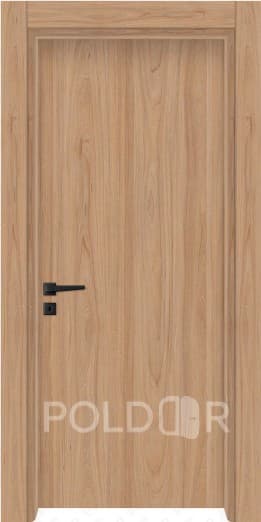
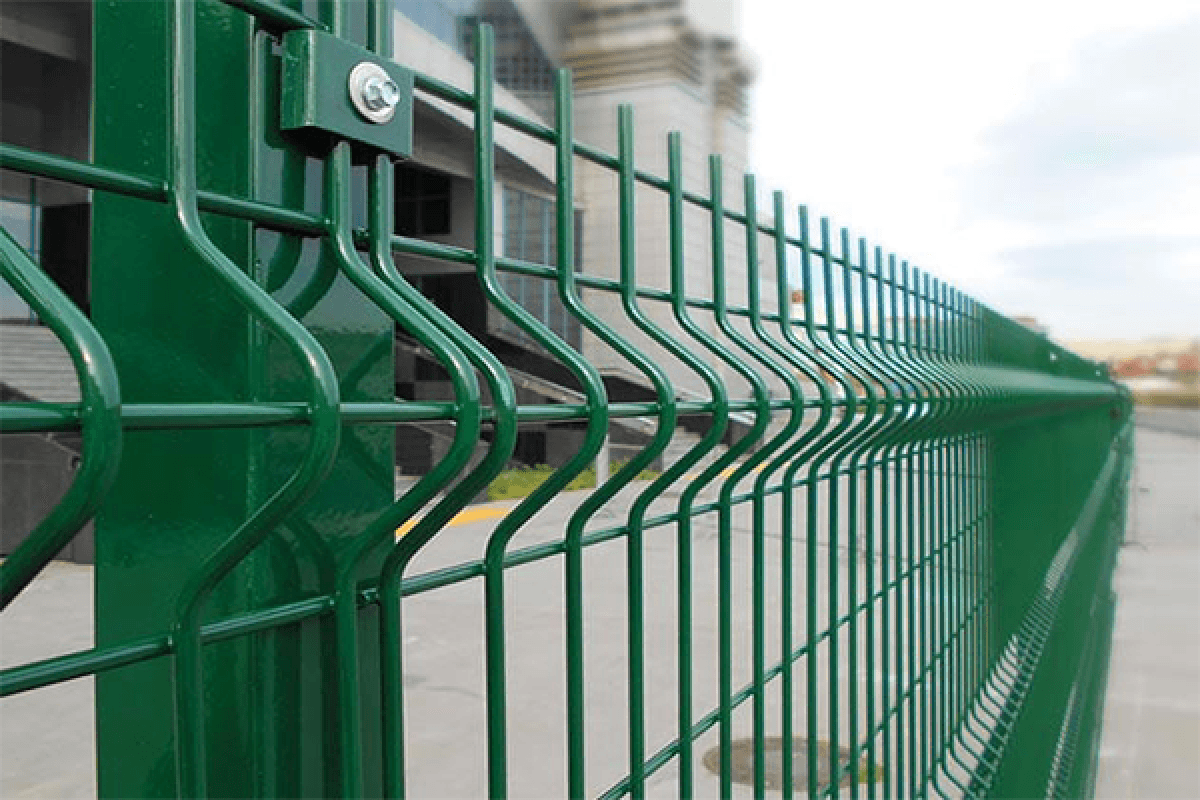



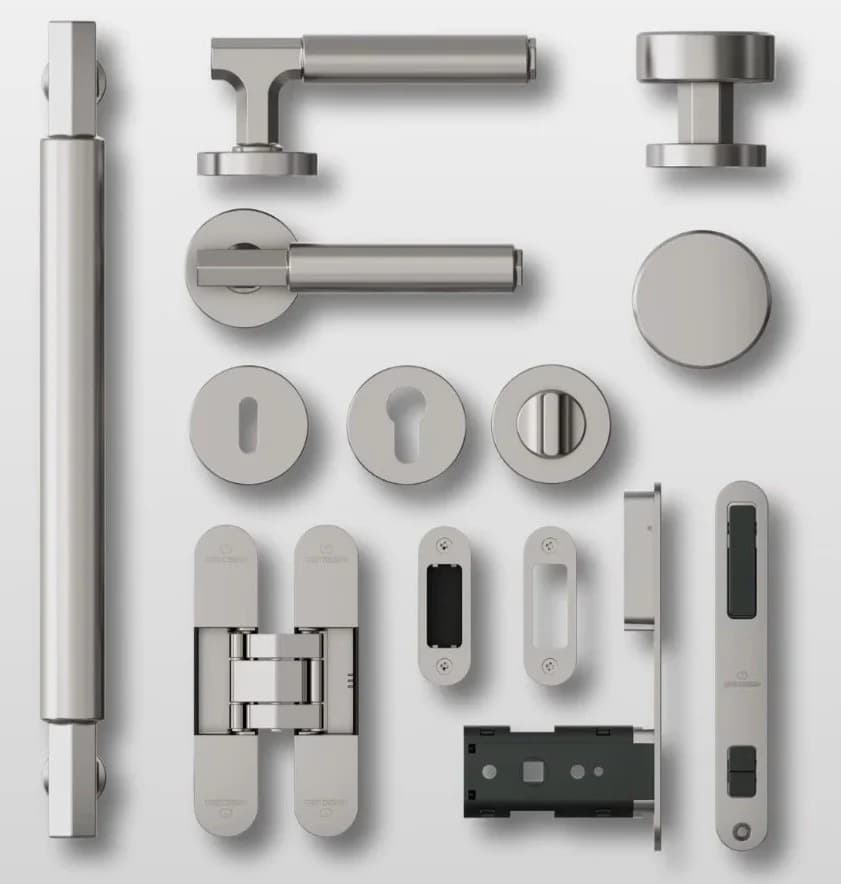
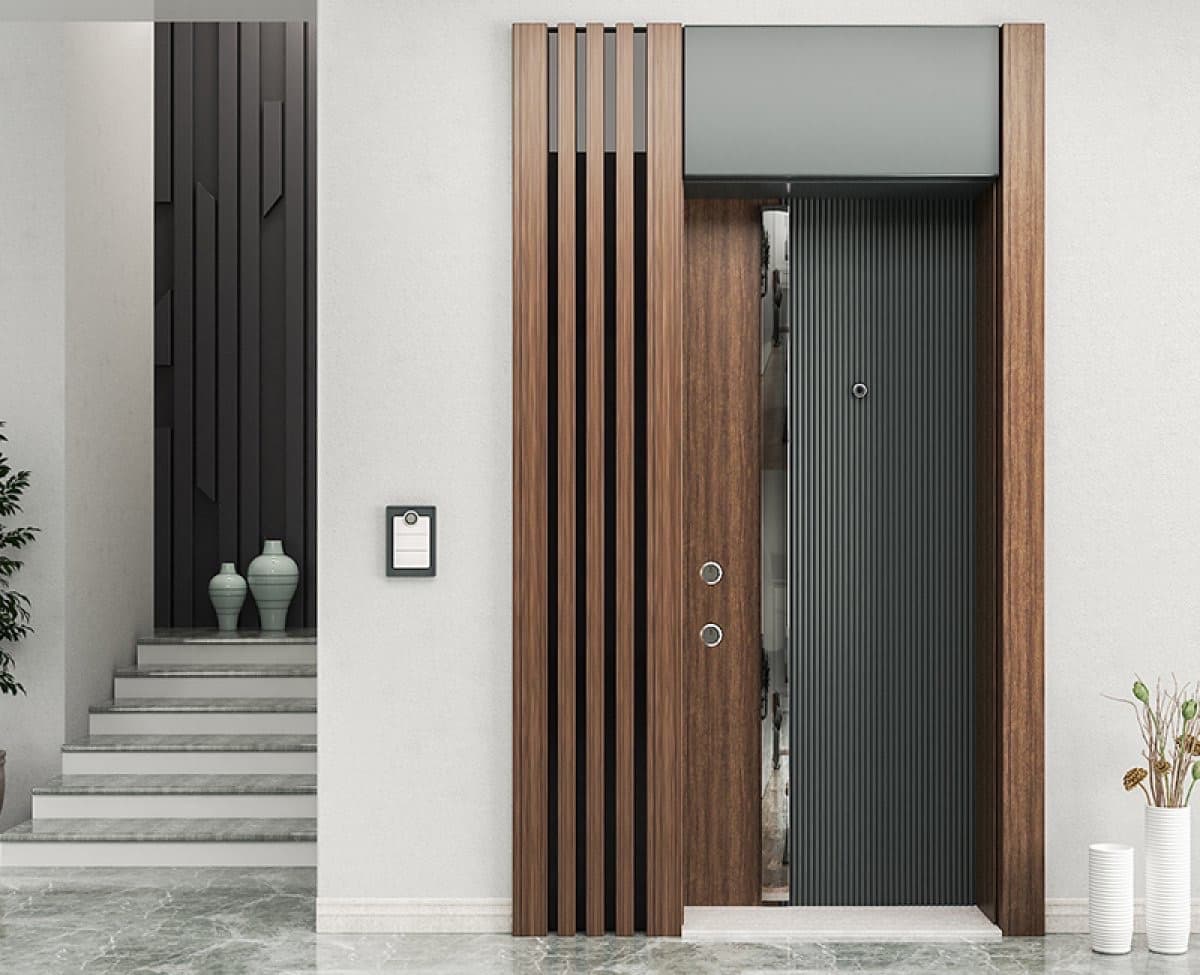


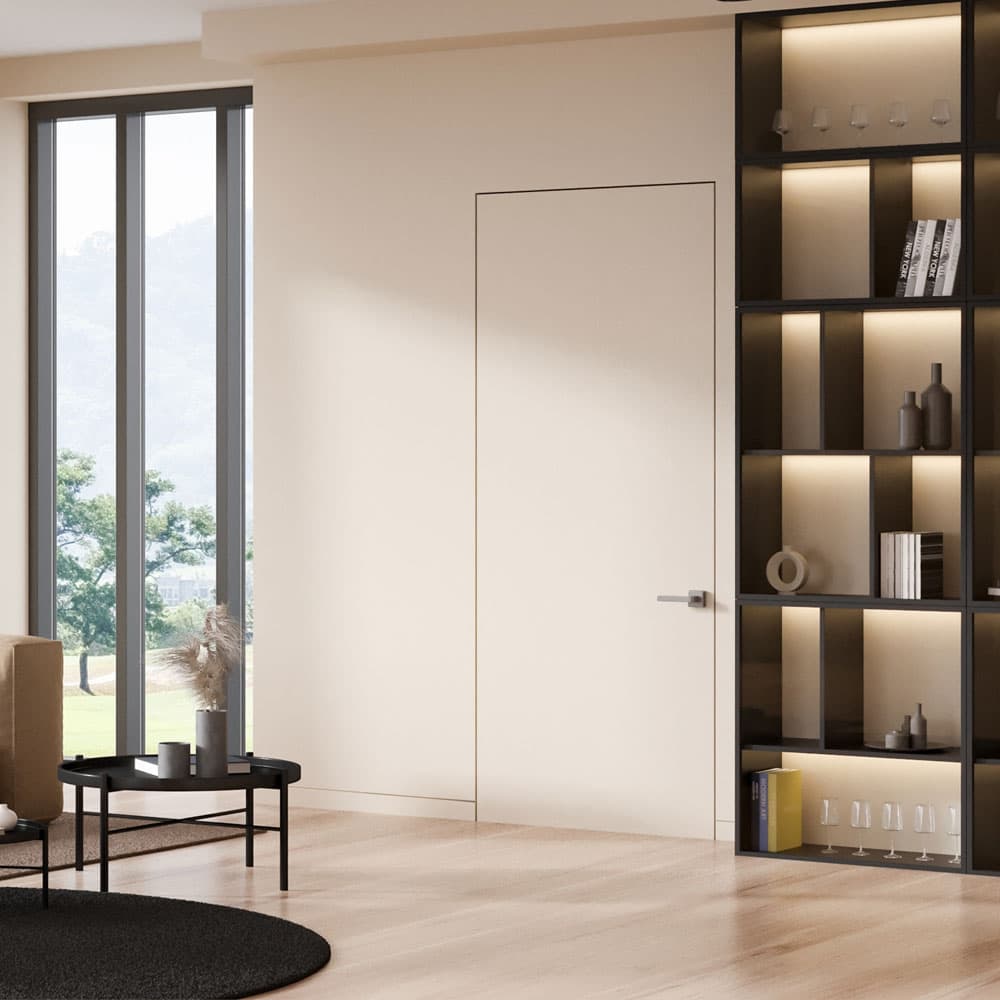
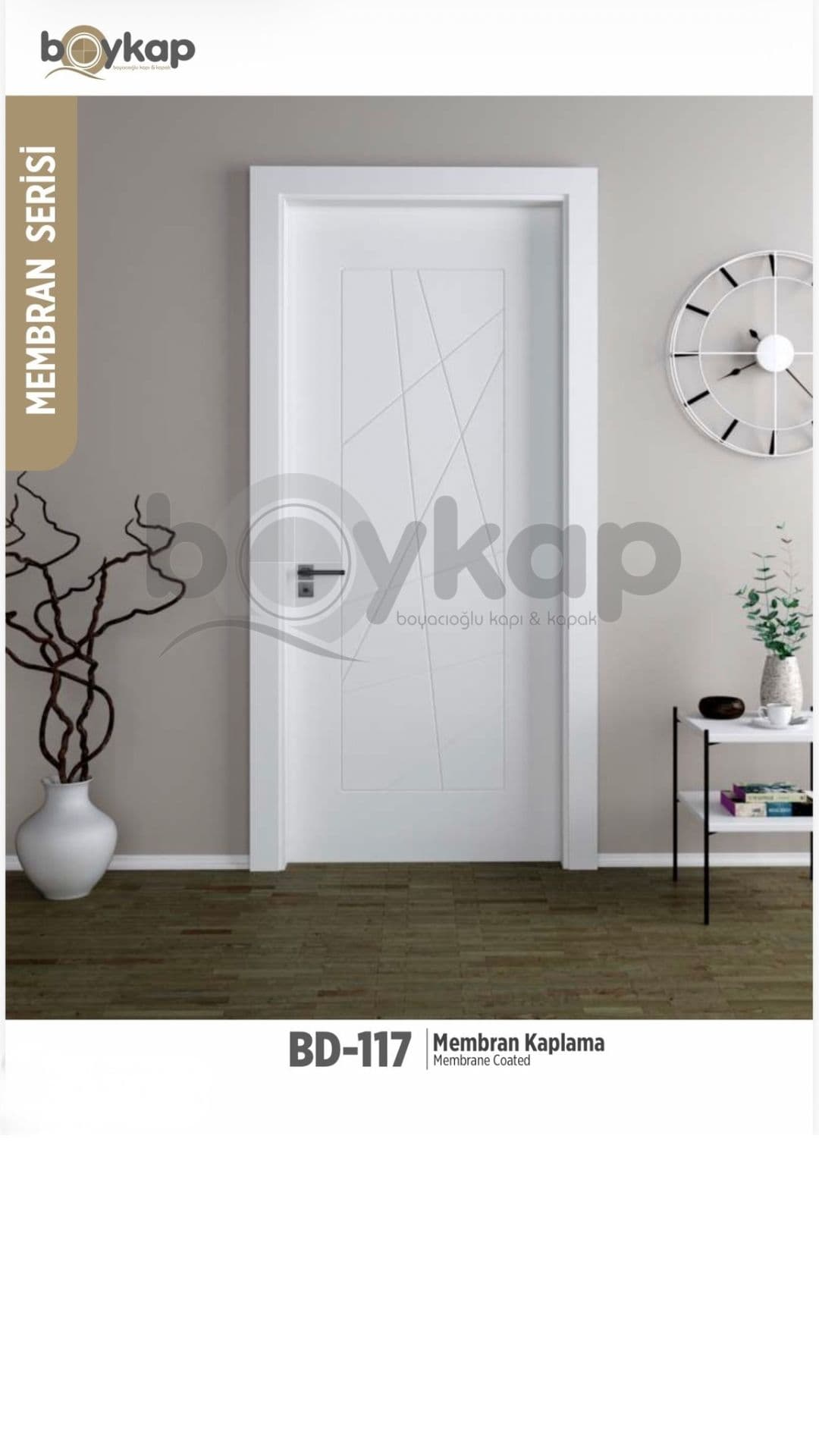
Browse construction materials and doors from Turkish manufacturers or post a request so it reaches the manufacturers in your category.
How many doors fit in a container?
How many doors fit in a container depends on the packed size and weight of each door, so ask the supplier for the carton dimensions and gross weight of every model and calculate both limits. A 40-foot high-cube container has about 76 cubic metres of internal volume, of which around 65–68 cubic metres can be used in practice, and a maximum payload of about 26.5–28.6 tonnes depending on the container; road weight limits in Türkiye and at destination can be lower.
The number of doors is the smaller of two figures: the usable volume divided by the volume of one packed door, and the maximum payload divided by the gross weight of one packed door. Heavy steel doors can reach the weight limit before the container is full, while light interior doors fill the volume first, which is why many buyers mix steel and interior doors in one container, with the heavy doors at the bottom and the weight spread evenly along the container floor; for an all-steel order, ask your forwarder whether a 20-foot container is the better choice. Doors packed with frames take more space than leaves alone. For container sizes and loading, see our guide to container freight from Türkiye to Africa.
Wooden pallets and crates used to pack the doors must be heat-treated or fumigated and stamped under ISPM 15, unless they are made of processed wood such as plywood or particleboard. Nigeria's plant quarantine service applies this rule to wood packaging; ask your agent whether finished wooden doors need any additional plant health document.
What are the import rules for doors in Nigeria, Ghana and Kenya?
Doors imported into Nigeria need SONCAP certification, doors imported into Ghana need a GSA EasyPASS certificate of conformity, and doors imported into Kenya need a KEBS PVoC certificate of conformity, all issued before shipment. Doors are not on Nigeria's revised 17-item import prohibition list in force since 1 April 2026, which covers mainly food, medicines, cement, soaps, cartons, glass bottles, coated corrugated steel sheet and pens; confirm the current list and your 10-digit code with a licensed customs agent before you open Form M. Tanzania and Uganda also require a PVoC certificate (TBS or UNBS), and Zimbabwe a CBCA certificate.
| Country | Conformity before shipment | Duty and taxes to check |
|---|---|---|
| Nigeria | SONCAP: doors are regulated products; since 27 March 2026 SONCAP is processed through the National Single Window with the 10-digit tariff code | ECOWAS common tariff of 20% on steel doors (HS 7308.30) to confirm, as Nigeria's 2026 fiscal policy measures changed many tariff lines; plus 7.5% VAT, the ETLS (0.5%) and CISS (1%) levies; confirm the rate for wooden doors |
| Ghana | GSA EasyPASS covers wood articles (chapter 44) and iron and steel articles (chapter 73); since 1 July 2026 the certificate comes from the GSA portal | ECOWAS common tariff, VAT 15% plus NHIL 2.5% and GETFund 2.5%; confirm the rate for your code |
| Kenya | KEBS PVoC: all imports need a certificate of conformity unless exempt | Steel doors: 35% or $350 per tonne, whichever is higher, under the 2026/27 East African Community measures; wooden doors 25%; plus 2.5% IDF, 2% RDL and 16% VAT |
Because steel doors are heavy, Kenya's per-tonne alternative duty can be higher than 35% of the value for low-priced doors; ask your clearing agent to calculate both. For Nigeria, see our guide to Form M, SONCAP and PAAR and for landed cost our Nigeria import duty guide.
How do you order doors from Turkey, step by step?
A first order of doors from Turkey works best when the sizes, technical drawings, sample and conformity certificate are settled before the deposit is paid.
1) Measure every opening and list the doors by type, size, opening direction and finish. 2) Ask two or three Turkish manufacturers for the price on the same specification, with technical drawings, steel thickness and lock details. 3) Order a sample door, or ask the supplier to measure the leaf and frame steel with a caliper on video or to send the steel mill certificate, and check the finish. 4) Agree in writing on the price, Incoterm (FOB or CFR rather than CIF for Nigeria, Ghana and Kenya, where cargo insurance is bought locally), packing, delivery time and what the set includes (frame, architraves, hinges, handle, lock, keys). 5) Start the SONCAP, EasyPASS or PVoC process with the supplier before production ends. 6) Inspect the doors or a production video before the balance payment, and keep the approved drawings as the reference.
How Tafric helps buyers of doors
On Tafric you post your door request for free, and Turkish door manufacturers contact you directly. Write the door type, the sizes, the quantity and your delivery city. Post your request.
Frequently asked questions
Where are steel doors made in Turkey?
Mainly in Kayseri, in central Anatolia. The local manufacturers' association says nine out of ten steel doors produced in Turkey come from the city, which also hosts a steel door fair.
What steel thickness should a security door have?
Published specifications from Turkish manufacturers show 1.5–2 mm steel for the frame, 0.9–1.5 mm cold-rolled steel for the leaf faces and 2.5–3 mm reinforcement around the hinges and lock. Ask for the exact thickness of each part in writing.
What is the standard door size in Nigeria?
Common steel security door sizes in Nigeria are 3 ft × 7 ft (about 900 × 2100 mm) and 4 ft × 7 ft, with double-leaf doors for wider entrances. Measure every opening and the wall thickness before ordering, because doors are made to size.
Are doors banned from import into Nigeria?
Doors are not on Nigeria's revised import prohibition list in force since 1 April 2026. They need SONCAP certification. Confirm the current list and your 10-digit tariff code with a licensed customs agent before you open Form M.
What is the import duty on steel doors in Kenya?
Under the East African Community measures for 2026/27, Kenya applies 35% or $350 per tonne, whichever is higher, on steel doors and frames (HS 7308.30). Wooden doors are at 25%. IDF, RDL and 16% VAT are added.
How many doors fit in a 40-foot container?
It depends on the packed size and weight of each door. Divide the usable volume (about 65–68 cubic metres in a 40-foot high-cube) by the volume of one packed door, divide the maximum payload (about 26.5–28.6 tonnes) by its gross weight, and take the smaller number.