



ON THIS PAGE
Tafric request data as of November 17, 2026
A blast freezer price in Nigeria depends less on the size of the box than on how many kilograms of fresh product it must freeze per batch, and how fast. A blast freezer blows air at about -30 to -40 °C to bring the product core to -18 °C, so its refrigeration unit is far larger than a storage freezer's. Compare suppliers on the same specification, not on one figure.
Tafric is a B2B marketplace that connects Turkish manufacturers with African buyers: the buyer posts a request for free, Tafric checks it, and Turkish manufacturers in that category contact the buyer directly.
What does a blast freezer price in Nigeria depend on?
The price of a blast freezer is set mainly by its freezing capacity, meaning the kilograms of product it can take from the incoming temperature to -18 °C at the core in one cycle, and by the cycle time you need. A room that freezes 3,000 kg per cycle needs a far bigger compressor, evaporator and fans than one of the same size that freezes 500 kg.
| Price factor | Why it matters | What to write in your request |
|---|---|---|
| Capacity per batch (kg) | decides the size of the refrigeration unit, the biggest cost item | e.g. 2,000 kg of dressed chicken per cycle |
| Product temperature in and out | warm, freshly slaughtered product needs more refrigeration than pre-chilled product | e.g. in at +10 °C, core -18 °C |
| Cycle time | a shorter cycle needs more refrigeration power | e.g. one cycle per night |
| Type | cabinet, walk-in room, trolley room, tunnel or plate freezer | room with trolleys, or cabinet for a kitchen |
| Panels and floor | panel thickness in mm and insulation type (PU or PIR); freezing rooms need thicker panels and an insulated, heated or ventilated floor against frost | inside size and whether you have a concrete slab |
| Refrigeration unit | refrigeration capacity in kW at the evaporating temperature (e.g. -40 °C), monoblock or split, condenser rated for tropical heat | your peak outdoor temperature |
| Power | three-phase supply, generator or solar backup | voltage, phases, generator size |
| Scope | delivery to your port only, or installation, commissioning and training too | CFR Lagos, or delivered and installed in Harare |
Compare capacity, not compressor size: ask for the refrigeration capacity in kW at the evaporating temperature and at your outdoor temperature, because two '6 hp' units can freeze very different loads. The price you finally pay in Nigeria also includes items outside the equipment: sea freight, compulsory local cargo insurance, import duty and levies for the HS code, VAT, port and clearing agent charges, the exchange rate on the day the Form M is funded, and on-site installation with generator or solar backup. That is why two 'blast freezer prices in Nigeria' are rarely comparable.
Buyers also search 'used blast freezer price in Nigeria'. With second-hand units the compressor's condition and refrigerant are unknown, and Nigeria's import prohibition list includes used fridges and freezers (HS 8418.10–8418.69) and used compressors, so a used unit cannot simply be imported; check the current list with a licensed clearing agent. Other countries have their own rules.
Blast freezer, cold room or chest freezer: which do you need?
A blast freezer freezes fresh product quickly, a freezer cold room stores product that is already frozen, and a chest freezer stores small quantities; a poultry or fish business that freezes its own product needs both a blast freezer to freeze each batch and a freezer room to store it. Household chest freezers sold with 'fast freeze' or 'super freeze' functions are storage freezers, not blast freezers: warm meat loaded into them freezes slowly and warms the product already inside.
| Equipment | Air temperature | Job | Typical buyer |
|---|---|---|---|
| Blast freezer | about -30 to -40 °C | freezes fresh product fast to -18 °C at the core | poultry processors, fish farms and importers, meat plants, food producers |
| Blast chiller | about 0 °C (soft chill) to about -20 °C (hard chill); food core to +3 °C | cools cooked or fresh food fast without freezing | restaurants, hotels, central kitchens |
| Freezer cold room | about -18 to -25 °C | stores frozen product for weeks | cold stores, distributors, supermarkets |
| Chest freezer | about -18 °C | small storage, not fast freezing | shops, homes, market sellers |
If your fish or chicken arrives already frozen, a freezer room is enough. If you slaughter, catch or process product yourself, the usual layout is a blast freezer that empties into a freezer room every cycle. Our guide to buying a cold room from Turkey covers the storage room, panels and installation in detail.
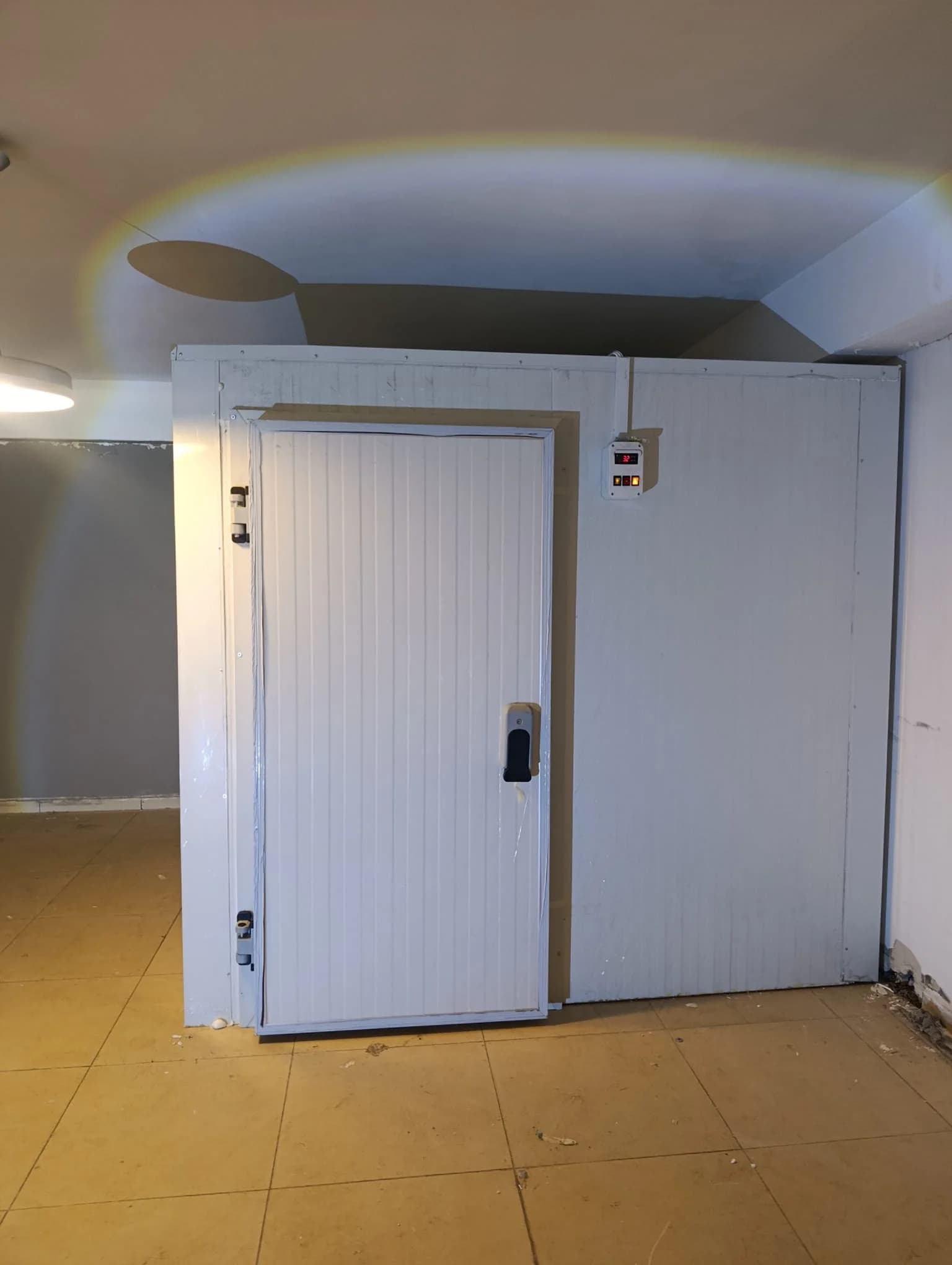



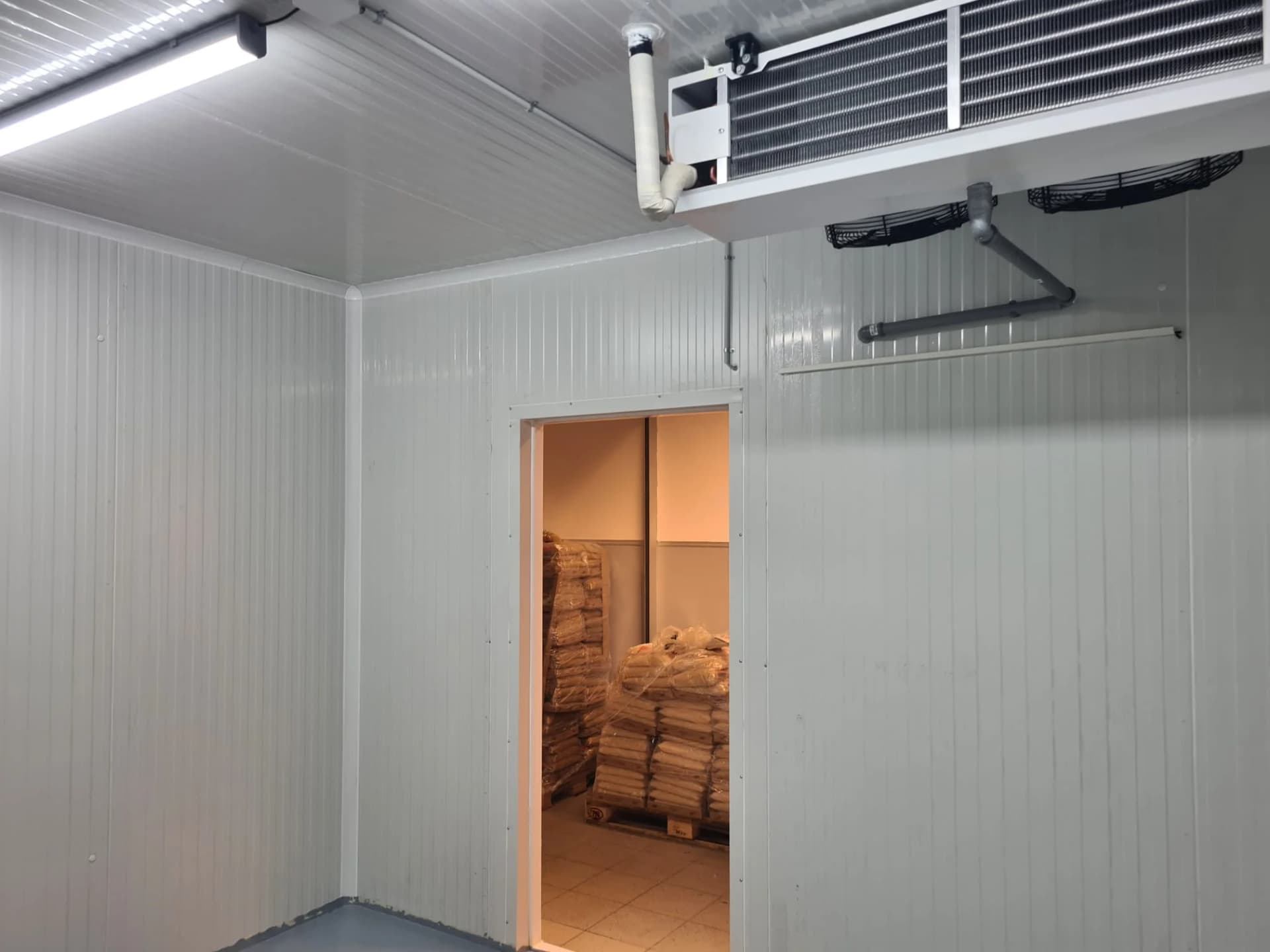
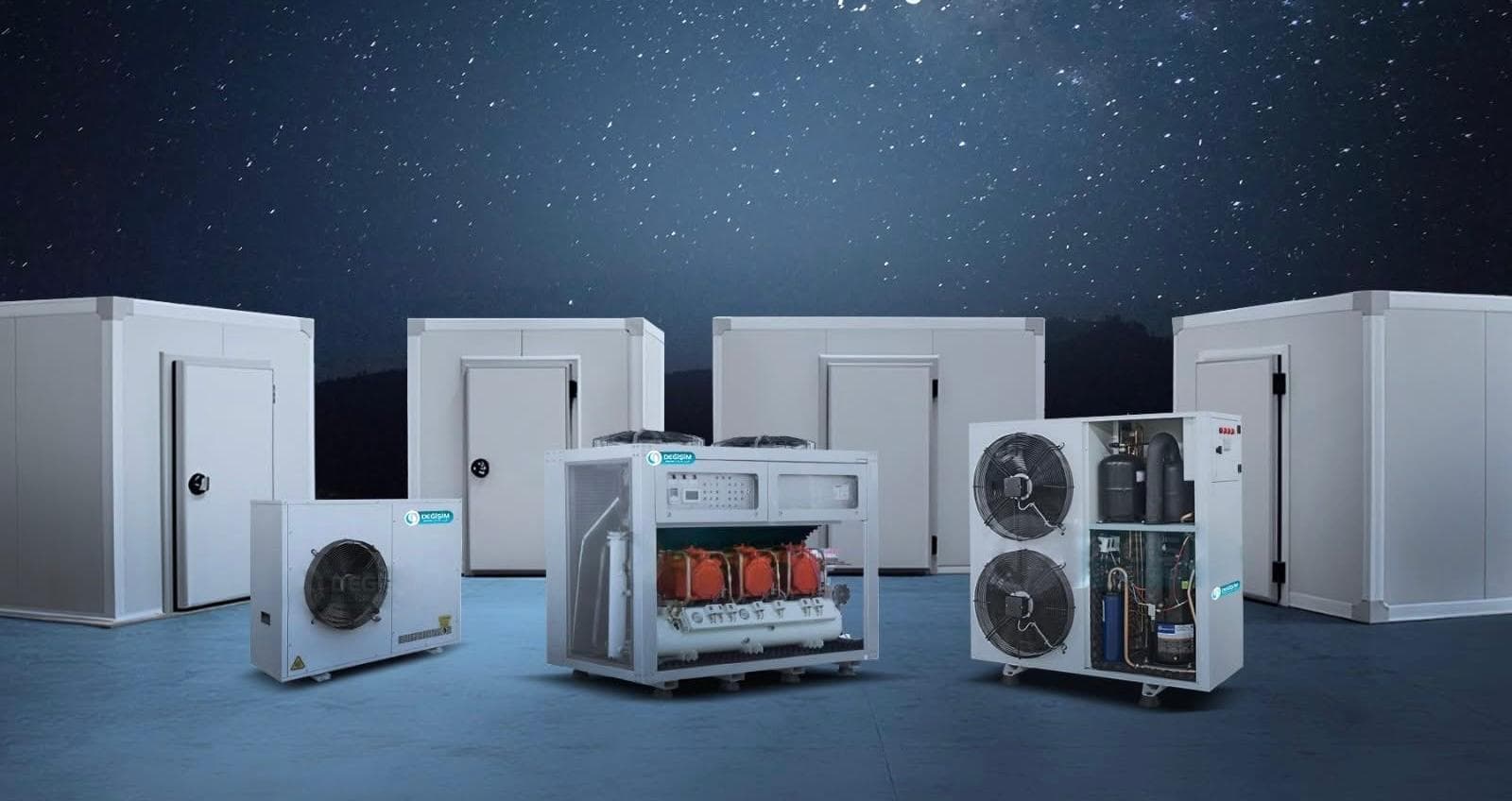
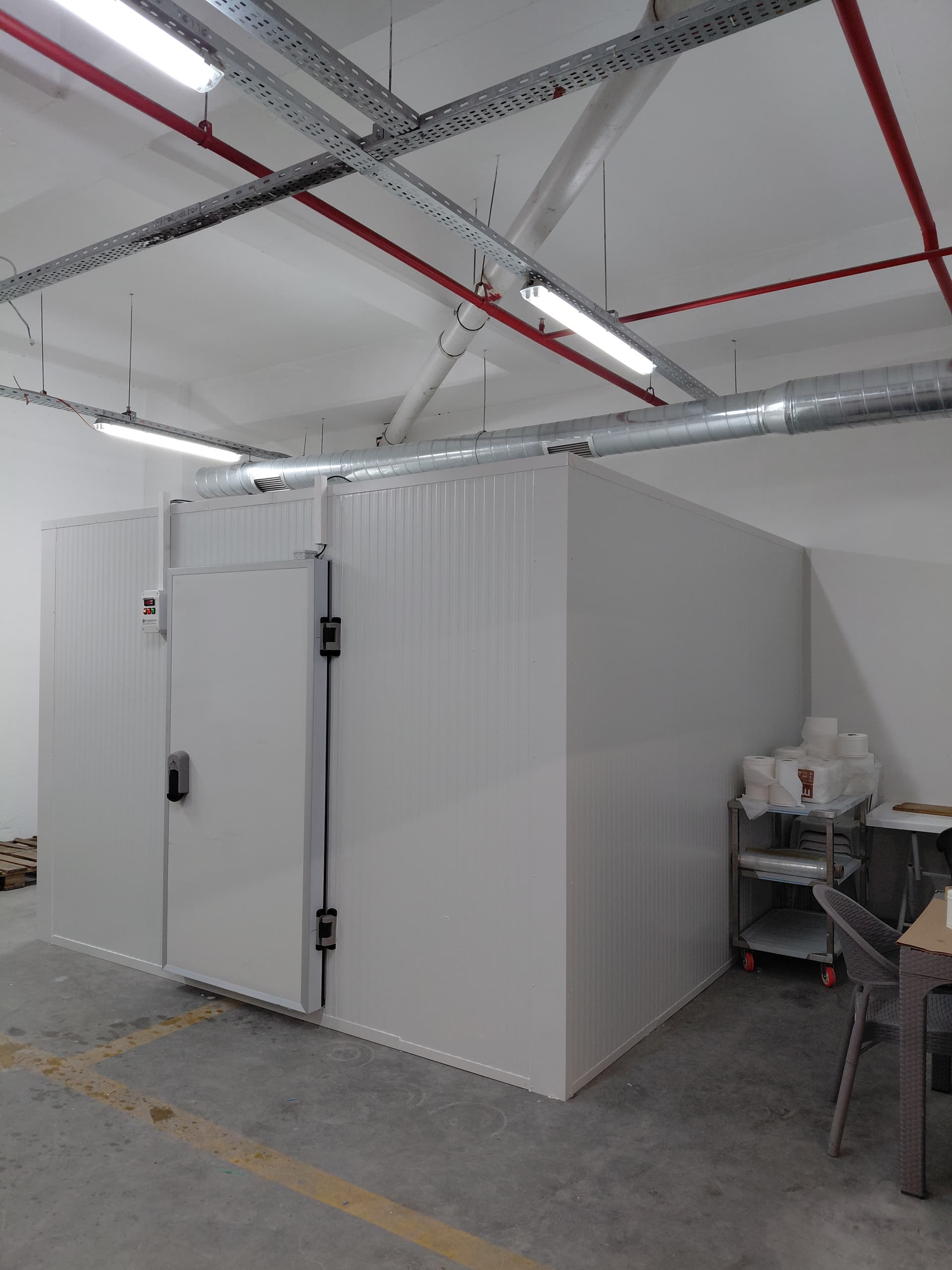
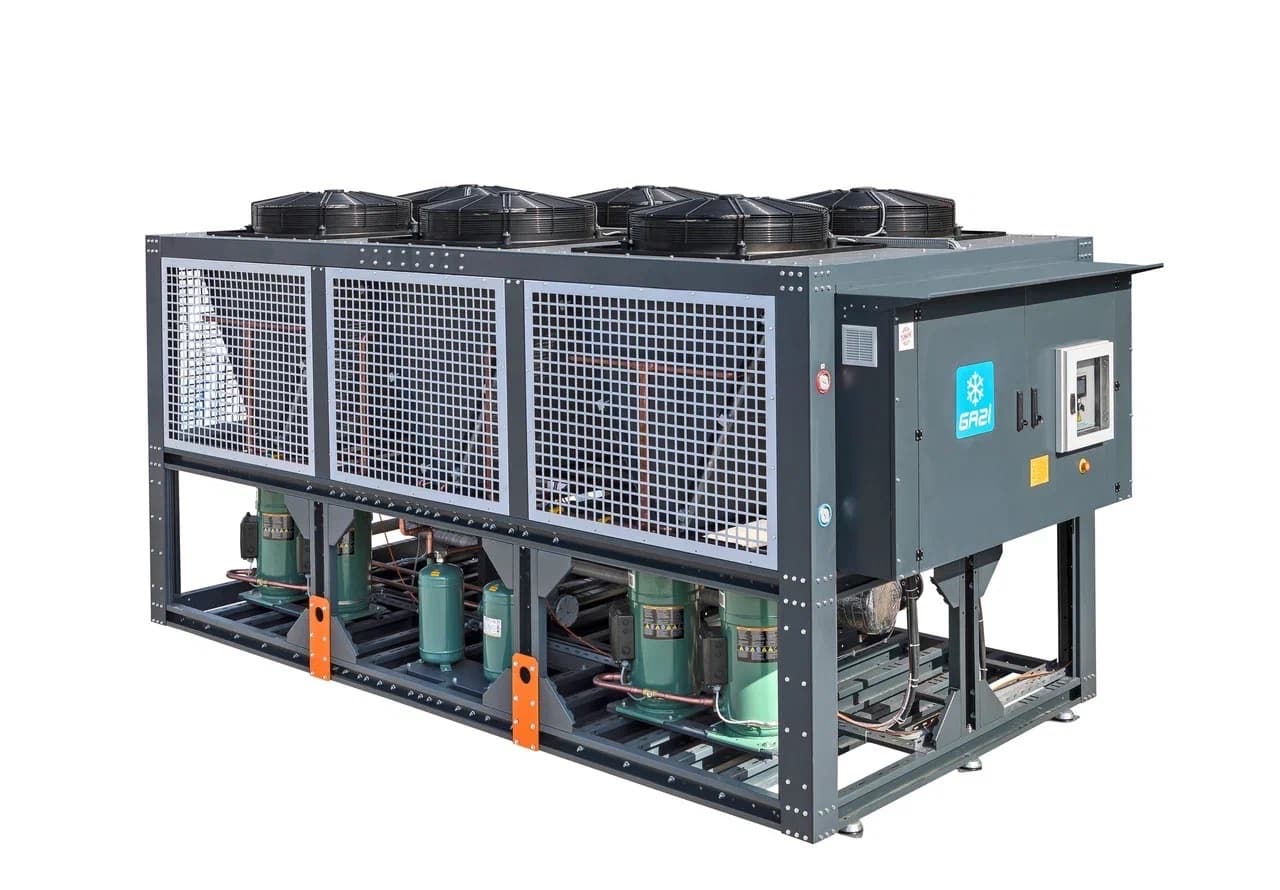
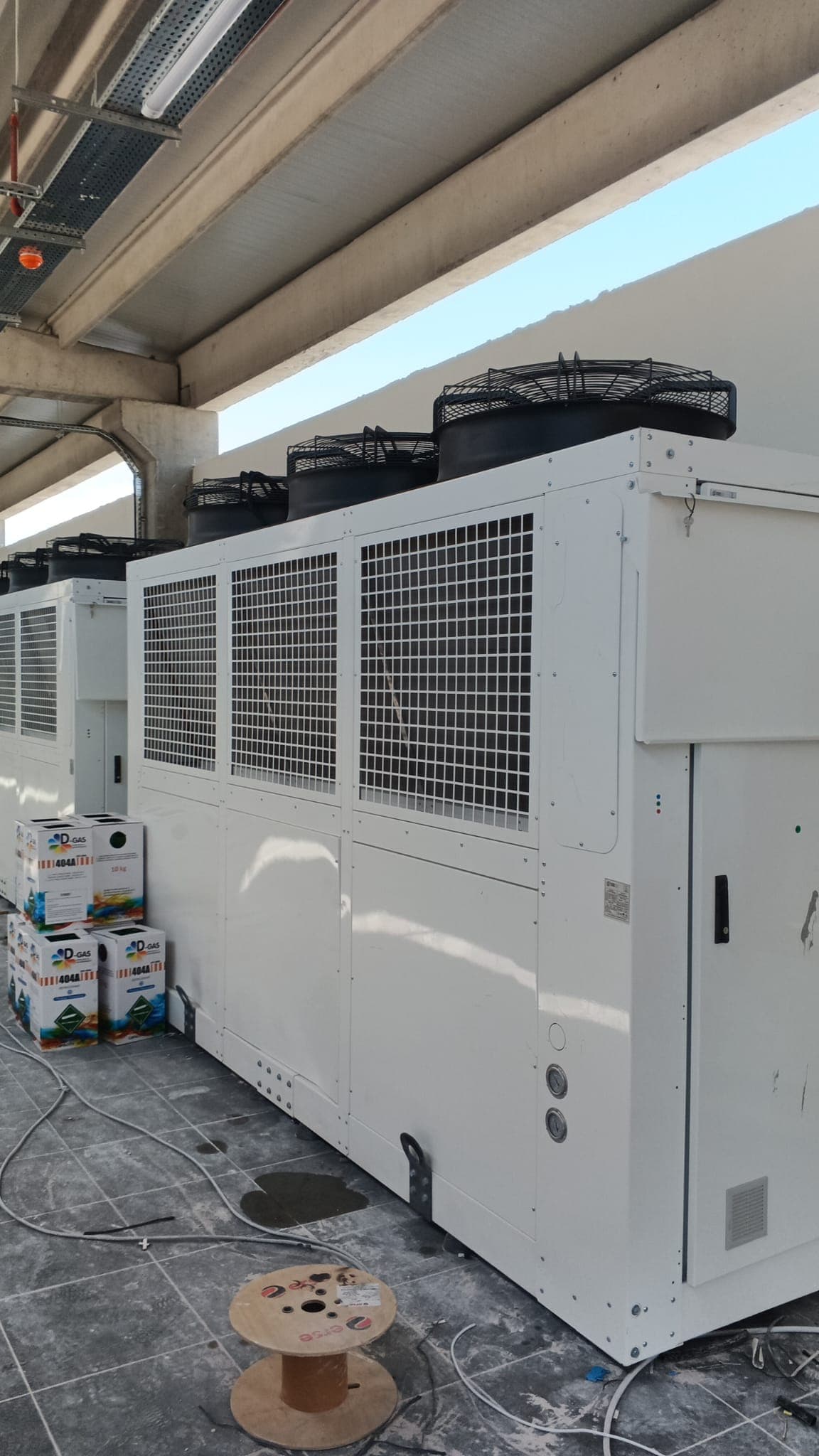
Browse cold rooms and blast freezers from Turkish manufacturers, or post your blast freezer request with the product, kilograms per batch and your city.


What temperature is a blast freezer, and how long does it take to freeze?
A blast freezer usually runs with air at about -30 to -40 °C, and for cooked food, blast freezer makers commonly rate their cabinets to bring the core from about +70–90 °C to -18 °C within about 240 minutes (4 hours), a catering benchmark linked to UK cook-freeze guidance. That benchmark comes from catering; the freezing time of raw chicken, fish or meat in a processing plant depends on the product's thickness, its packaging, the starting temperature, the air speed and how the load is stacked.
Cartons and stacked pallets freeze far more slowly than loose portions. Ask every supplier to state the cycle time for your exact product and packaging: for example, '1.2–1.8 kg dressed chickens in bags, 10 per crate, from +10 °C to -18 °C at the core'. Ask also how the load is placed (trolleys, racks or spaced pallets) and whether a core probe and temperature log are included.
How do you size a blast freezer for poultry or fish?
You size a blast freezer from the kilograms you must freeze per day and the number of cycles you can run, not from the number of birds alone. As an example, 5,000 dressed chickens at about 1.5 kg each make roughly 7.5 tonnes of product; if the blast freezer runs one cycle per day, it must freeze about 7.5 tonnes per cycle, and if it runs two cycles, about 3.75 tonnes per cycle in a smaller room, but the unit must remove that heat in half the time, so it is not half the size.
The freezer room behind it is sized from how many days of production you store and how fast you sell. Freezing 7.5 tonnes a day and keeping two weeks of stock means storage for about 100 tonnes plus aisles and airflow space. Buyers' requests on Tafric often read 'blast freezer and cold room' or 'blast freezer for poultry', and many give the size as a number of chickens or a compressor size in hp; the clearer you are about daily kilograms, the easier it is for manufacturers to calculate the unit. Write these numbers in your request:
| Item | Example |
|---|---|
| Product and packaging | dressed whole chickens in bags, crates of 10 |
| Weight per piece | 1.2–1.8 kg |
| Kilograms to freeze per day | 7,500 kg |
| Cycles per day | 1 (overnight) |
| Product temperature in | about +10 °C after chilling |
| Storage needed after freezing | about 100 tonnes at -20 °C |
| Site | concrete slab, roof height, outdoor peak temperature |
| Power | three-phase grid, generator size, solar or not |
Can a blast freezer run on solar power in Nigeria or Zimbabwe?
A blast freezer can be supplied with solar power, but it is one of the most power-hungry cold room types, so solar projects for blast freezing usually combine solar panels with the grid, a generator or batteries rather than relying on solar alone. Running the cycle in sunny hours, thick insulation and an inverter-driven compressor reduce the solar system you need.
Ask each supplier for the electrical consumption in kW (a separate figure from refrigeration capacity, needed for the generator or solar design), the starting current of the compressor, the voltage and phases (380–415 V three-phase is usual for room units; Nigeria, Ghana, Kenya and Zimbabwe all use 50 Hz), and whether a voltage protector is included. Ask also for a condenser rated for your hottest outdoor temperature, for example 43 °C or more. For solar and backup equipment, see our guides on solar panels, inverters and batteries from Turkey and Nigeria's generator imports.
How do you import a blast freezer from Turkey, step by step?
Importing a blast freezer from Turkey works best when capacity, cycle time and power are fixed in writing before the deposit. Turkish cold room and refrigeration manufacturers, spread across Istanbul and the Marmara, Central Anatolia and the Aegean, ship rooms flat-packed.
1) Write the specification (see the table above). 2) Ask two or three Turkish manufacturers for the price on the same specification, broken down into panels, door, refrigeration unit, evaporator and fans, controls, installation materials, installation service and freight to your port. 3) Ask which low-temperature refrigerant the unit uses, whether local technicians service it, whether compressor spare parts are available where you are, and what the warranty covers. 4) Ask for the panel plan, installation manual and on-site or remote commissioning. 5) Order a spare kit (fan motors, controller, valves). 6) Start the conformity certificate your country requires before loading, and agree the Incoterm: buyers in Nigeria, Ghana, Kenya and Tanzania should buy FOB or CFR and insure locally, because the law there requires import cargo to be insured with a local insurer (in Nigeria under section 82 of the Nigerian Insurance Industry Reform Act 2025, in Ghana under the Insurance Act 2021, Act 1061).
| Country | Rule to check before shipping |
|---|---|
| Nigeria | SONCAP applies to many electrical products; since 27 March 2026 SONCAP and import permits run on the National Single Window. Confirm the HS code with a licensed clearing agent before you open Form M. |
| Ghana | Since 1 July 2026 the GSA EasyPASS certificate is obtained from the GSA portal before shipment for regulated goods. |
| Kenya, Tanzania, Uganda | Pre-export verification of conformity (PVoC) programmes require a certificate of conformity before shipment for regulated products. |
| Zimbabwe | Refrigerating and freezing equipment (HS 84.18) is on the CBCA list: consignments above US$1,000 FOB need a certificate of conformity before shipment; without it, a penalty of 12% of the CIF value and inspection at destination apply. Check separately whether the panels need one. |
Refrigeration equipment is usually classified under HS heading 8418 and insulated panels separately, but the exact code depends on the type, so let your clearing agent confirm it. For the details of each country, see importing from Türkiye to Nigeria, to Zimbabwe and our guide to shipping from Turkey to Nigeria.
How Tafric helps buyers of blast freezers
On Tafric you post your blast freezer request for free, and Turkish cold room and refrigeration manufacturers contact you directly. Write the product, kilograms per batch, temperatures, cycle time, power and delivery city, and add site photos if you have them. Post your blast freezer request.
Frequently asked questions
What is a blast freezer?
A blast freezer is a freezer that blows very cold air, usually about -30 to -40 °C, over fresh product to freeze it quickly to -18 °C at the core.
What is the difference between a blast freezer and a cold room?
A blast freezer freezes fresh product fast; a freezer cold room stores product that is already frozen at about -18 to -25 °C. A poultry or fish business that freezes its own product needs both.
How long does a blast freezer take to freeze?
For cooked food, a common catering benchmark is from about +70–90 °C to -18 °C at the core in about 240 minutes (4 hours). Raw chicken, fish or meat in cartons can take longer; ask the supplier to state the cycle time for your exact product and packaging.
Is a blast chiller the same as a blast freezer?
No. A blast chiller cools food quickly to a core of about +3 °C without freezing it, mainly for kitchens. A blast freezer freezes product to -18 °C at the core. Some cabinet units can do both.
Can I buy a small blast freezer for a fish shop?
Yes. Cabinet blast freezers suit small batches in restaurants and shops. If you freeze more than a few hundred kilograms a day, a walk-in blast freezer room is usually more practical. Write your kilograms per day in the request.
Where can I buy a blast freezer for sale in Zimbabwe or Nigeria from Turkey?
Post a free request on Tafric with the product, kilograms per batch, temperatures and power supply; Turkish cold room and refrigeration manufacturers contact you directly. Zimbabwe requires a CBCA certificate for freezing equipment above US$1,000 FOB, and Nigeria applies SONCAP; plan both before shipping.

The Tafric Editorial Team writes export, import and shipping guides for trade between Türkiye, Africa and the Middle East. Articles use data from real buying requests published on Tafric (with no personal information, stating the period covered) and official sources such as customs authorities, trade ministries, UN Comtrade and the World Bank. Articles get a second review of figures and regulations before publication and are updated when rules change. Details: our Editorial policy page.